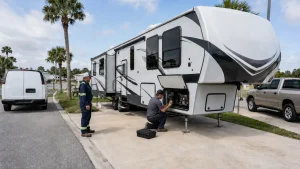
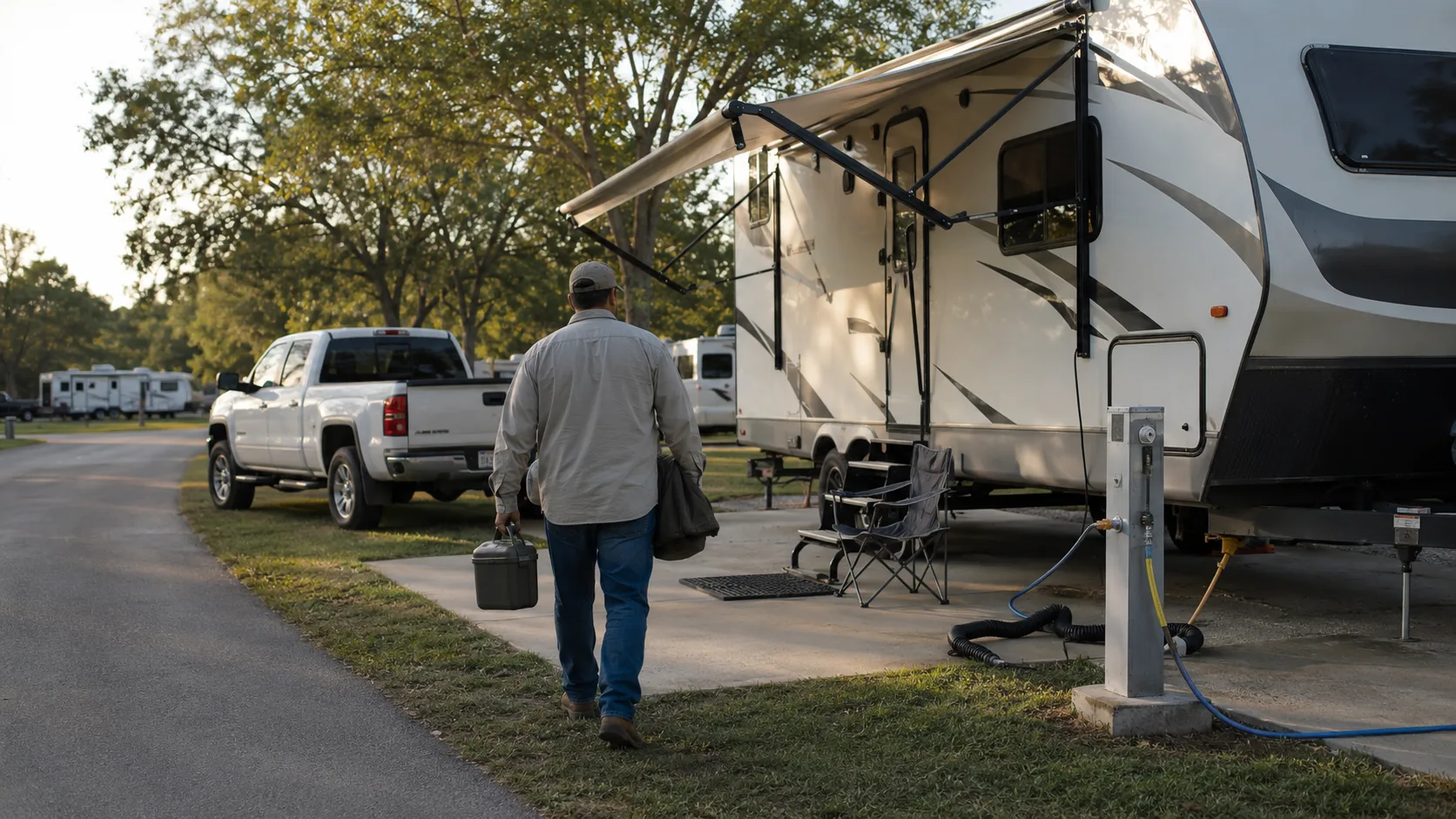
Long stays require more than just a place to park. When someone is staying for work, living temporarily between housing plans, or settling in for several weeks at a time, the goal changes completely. It is no longer just about arriving, connecting a few basics, and moving on. It becomes about comfort, routine, and reliability.
That is why workers and long-stay guests often think about RV park living differently than short-term travelers do. They are not just looking for a stop. They are looking for a setup that helps daily life run more smoothly. They need a space that works before sunrise, after long shifts, on laundry days, on grocery runs, and on the evenings when all they want is a little quiet and a simple routine.
The good news is that RV park life can work very well for extended stays when it is approached the right way. A good setup does not have to be complicated. In fact, the best long-stay setups are usually the simplest ones. The key is building daily life around function instead of guesswork.
Choose a Setup That Supports Your Daily Routine
One of the biggest mistakes long-stay guests make is choosing or building a setup based only on arrival day. For workers and temporary residents, the better question is this: Will this setup still feel workable after two weeks, three weeks, or a month?
That is where daily routine becomes important.
Easy access matters. If you are getting in and out regularly, heading to work early, carrying groceries, or managing a repeated schedule, small inconveniences become bigger over time. A setup that feels fine for a night can become frustrating during a longer stay.
A practical site layout matters too. You want a site that feels workable, not awkward. The more naturally your RV, outdoor access, storage, and basic movement fit together, the easier daily life becomes.
Utility convenience should also be part of the decision. Water, electric, and sewer access are not just technical details. They shape how stress-free your stay feels. The smoother that part of the setup is, the more comfortable the rest of your routine becomes.
And for many long-stay guests, especially workers, rest and quiet considerations matter just as much as access and hookups. A place that helps you recover, sleep, and reset after a long day is not a luxury. It is part of what makes the stay sustainable.
The best setup is not the one that looks impressive on day one. It is the one that supports your real routine every day after that.
Keep Your Move-In Setup Simple
Long-stay comfort starts with move-in day, and the more complicated that day becomes, the harder it is to settle in well.
Confirm Utility Needs
Before arrival, make sure you understand your utility needs clearly. Know what your RV requires and what your site provides. This helps avoid preventable confusion and makes setup faster and calmer.
It is always easier to prepare before arriving than to troubleshoot basic needs while tired, rushed, or carrying too much at once.
Bring Only What Supports Daily Life
When preparing for a longer stay, people often overestimate what they will actually use. The smarter approach is to pack for real life. Think about what supports your routine: clothing you actually wear, cooking tools you actually use, bedding that helps you sleep well, and practical items that make everyday tasks easier.
The more directly your items support daily living, the better your space will function.
Avoid Overpacking
Overpacking is one of the quickest ways to make an RV feel harder to live in. Extra items take up storage, create clutter, and slow down your ability to settle into a rhythm. Long stays feel easier when the space feels under control.
That does not mean bringing too little. It means bringing intentionally.
Organize by Use, Not by Category
This simple shift helps more than many people expect. Instead of storing things based on what they are, store them based on when and how you use them.
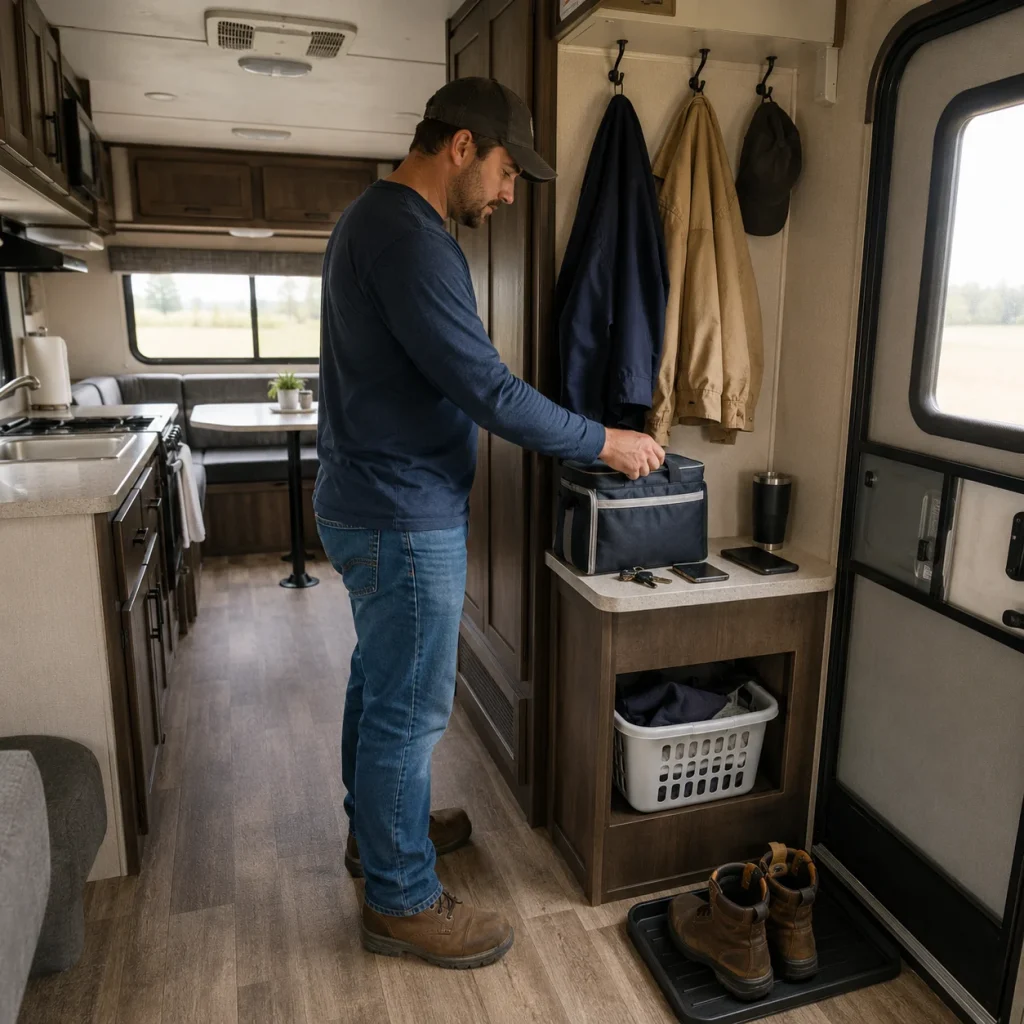
Keep work essentials together. Keep cooking items arranged by use. Keep cleanup items easy to reach. Keep laundry items in one ready-to-grab area. When the space reflects your routine, daily life becomes much smoother.
Create a Routine That Works in a Smaller Living Space
Smaller-space living becomes easier when routine replaces randomness.
Morning prep matters. If your mornings are rushed, the layout of your essentials can either help or hurt. Clothes, toiletries, food basics, and work gear should all be easy to reach without requiring a full reorganization every day.
Work clothes and storage also deserve attention. If you are staying for work, your clothing needs are probably more repetitive and functional than casual. That actually helps. Keep those items organized around your schedule, not buried under things you rarely use.
Food setup can also shape the quality of a longer stay. A simple meal routine, practical storage choices, and keeping frequently used items accessible can reduce daily friction in a big way.
A consistent laundry rhythm helps prevent one of the most common small-space problems: build-up. The same is true for cleanup discipline. In a compact living environment, waiting too long to reset the space almost always makes things feel more stressful than they need to.
And then there is sleep quality, which workers and long-stay guests should take seriously. If you are staying for more than a few days, your sleeping setup matters. Good bedding, simple organization, and a calm routine at the end of the day can make a noticeable difference in how stable the stay feels.
A smaller living space works best when the routine is simple, repeatable, and easy to maintain.
Small-Space Living Tips That Make a Big Difference
The smallest changes often have the biggest effect in RV park living.
Vertical storage helps make better use of limited space. When floor and counter space are tight, looking upward becomes one of the easiest ways to stay organized.
Collapsible items are also useful for long stays. Items that expand when you need them and disappear when you do not can make the space feel far more flexible without creating clutter.
Daily reset habits are another major help. Even a few minutes of putting things back where they belong can completely change how the space feels. In a traditional home, clutter can hide. In a smaller living space, it never really does.
That is why clutter prevention matters more than cleanup alone. The goal is not to let the mess build in the first place.
It also helps to think about the efficient use of outdoor space. In many RV setups, the area outside the door becomes part of everyday living. If used thoughtfully, it can reduce crowding inside and make the stay feel more open and comfortable.
The best long-stay RV spaces usually do not have more stuff. They simply use space better.
Common Challenges Workers Face During Long RV Stays
Long-stay RV living can work very well, but it does come with patterns that show up again and again, especially for workers and practical-minded guests.
Fatigue and Poor Sleep Setup
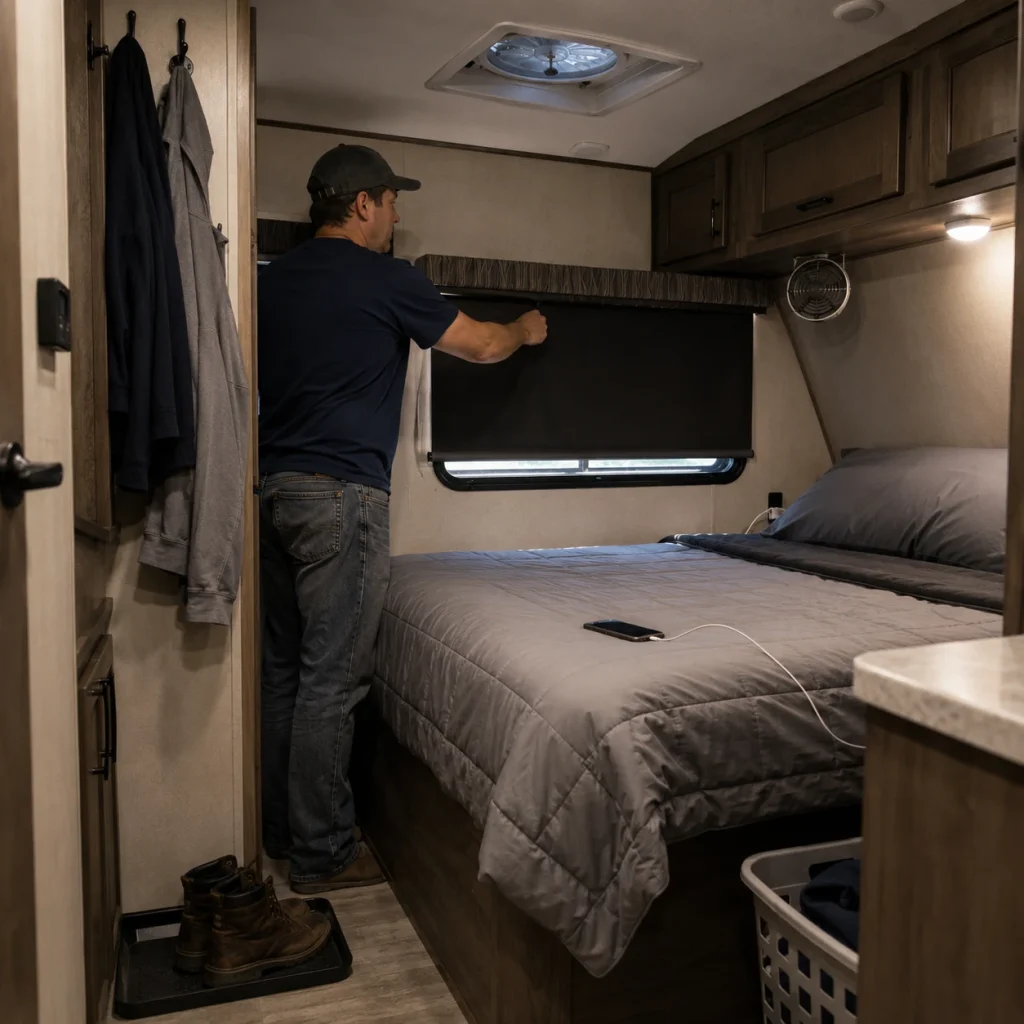
A tired person feels every inconvenience more deeply. If the sleeping setup is poor, the whole stay can begin to feel harder than it actually is. Sleep quality is not a side issue for long-stay workers. It is one of the foundations of a workable routine.
Storage Overload
When too much is brought in, the RV starts working against the guest instead of supporting them. Bags stay half-unpacked. Essentials get buried. The space feels crowded. Storage overload creates constant low-level frustration.
Utility Confusion
Some guests arrive without fully understanding power, hookups, or the flow of site setup. That does not always cause a major problem, but it can create stress right when they are trying to settle in. A little preparation goes a long way here.
Poor Food Prep Planning
Without a realistic food routine, even simple days start to feel disorganized. Long stays go better when cooking and food storage are easy, repeatable, and built around real habits rather than ideal plans.
Lack of Daily Routine
This may be the biggest issue of all. When long-stay guests do not build a rhythm, the space starts to feel unstable. The most comfortable long stays are rarely the fanciest. They are the most structured.
How Cabin Stays Can Be Easier for Some Long-Stay Guests
RV living works well for many people, but it is not automatically the best choice for every guest.
For some long-stay guests, a cabin offers a simpler entry into temporary living. There is less to figure out on arrival and less technical responsibility from the beginning.
There are also no RV systems to manage, which can be a major advantage for someone who wants practical housing without the added task of handling hookups, power setup, storage constraints, or RV-specific routine planning.
That makes cabins especially useful for guests who need temporary housing without setup complexity. They still get the benefit of a stay designed around simplicity and practicality, but with fewer moving parts.
For some people, the best setup is the one that asks less of them at the end of a long day.
How to Make a Temporary Stay Feel Stable
Stability usually comes from routine, not from size.
The first step is to build routine. The more consistent your mornings, evenings, meals, work prep, and cleanup become, the more the space starts to feel reliable.
It also helps to keep essentials in fixed places. When work gear, cooking tools, toiletries, and daily-use items stay in the same spot, the space becomes easier to live in and easier to maintain.
Try to simplify what you use every day. Long stays become more comfortable when the space reflects what you actually need rather than everything you might use once.
Most importantly, it helps to treat the space like a working home base. That mindset changes everything. Instead of seeing it as a temporary stop that never quite settles, you begin shaping it into something dependable. That is what makes a longer stay feel manageable.
Frequently Asked Questions
Workers and long-stay guests usually need more than a short-term parking setup. They need comfort, routine, utility reliability, and a space that supports daily life over an extended stay.
Keep it simple. Confirm utility needs before arrival, bring only what supports everyday living, avoid overpacking, and organize your space around how you actually use it each day.
One of the biggest mistakes is bringing too much. Too many items create clutter, reduce usable space, and make daily routines harder to manage.
Routine helps small-space living feel stable. When your mornings, meals, cleanup, work prep, and sleep setup are consistent, daily life becomes easier and less stressful.
A better sleep setup starts with simple priorities: practical bedding, less clutter, a calmer evening routine, and a space organized to support rest instead of chaos.
A cabin may be the better option. It offers a simpler stay with less setup responsibility and can be a better fit for guests who want temporary housing without managing RV systems.
Yes. Cabins can be a practical solution for temporary residents who want a straightforward place to stay without the added complexity of RV setup and utility management.
Build a routine, keep essentials in fixed places, simplify daily-use items, and treat the space like a working home base instead of a short stop.
Final Thoughts
Long-stay guests do best with structure, not just space.
Workers, temporary residents, and practical-minded RV guests usually do not need perfection. They need a setup that makes life easier. They need comfort that feels realistic, routines that can hold up over time, and a space that supports daily life instead of creating more friction.
That is why the best RV park living tips are often simple. Choose a setup that fits your routine. Keep move-in uncomplicated. Organize for real life. Protect sleep. Avoid clutter. Stay clear about utilities. And build a rhythm that makes the space feel stable.
The goal is not to make a long stay feel like a vacation. The goal is to make it feel comfortable, practical, and manageable.
If you are deciding between an RV site and a cabin, the best choice is the one that fits how you will actually live during your stay, not just what sounds good at first.