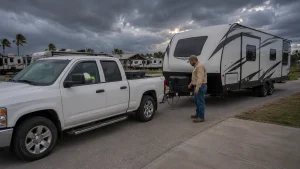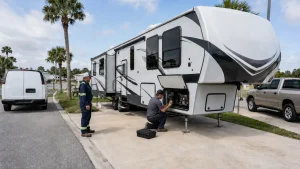
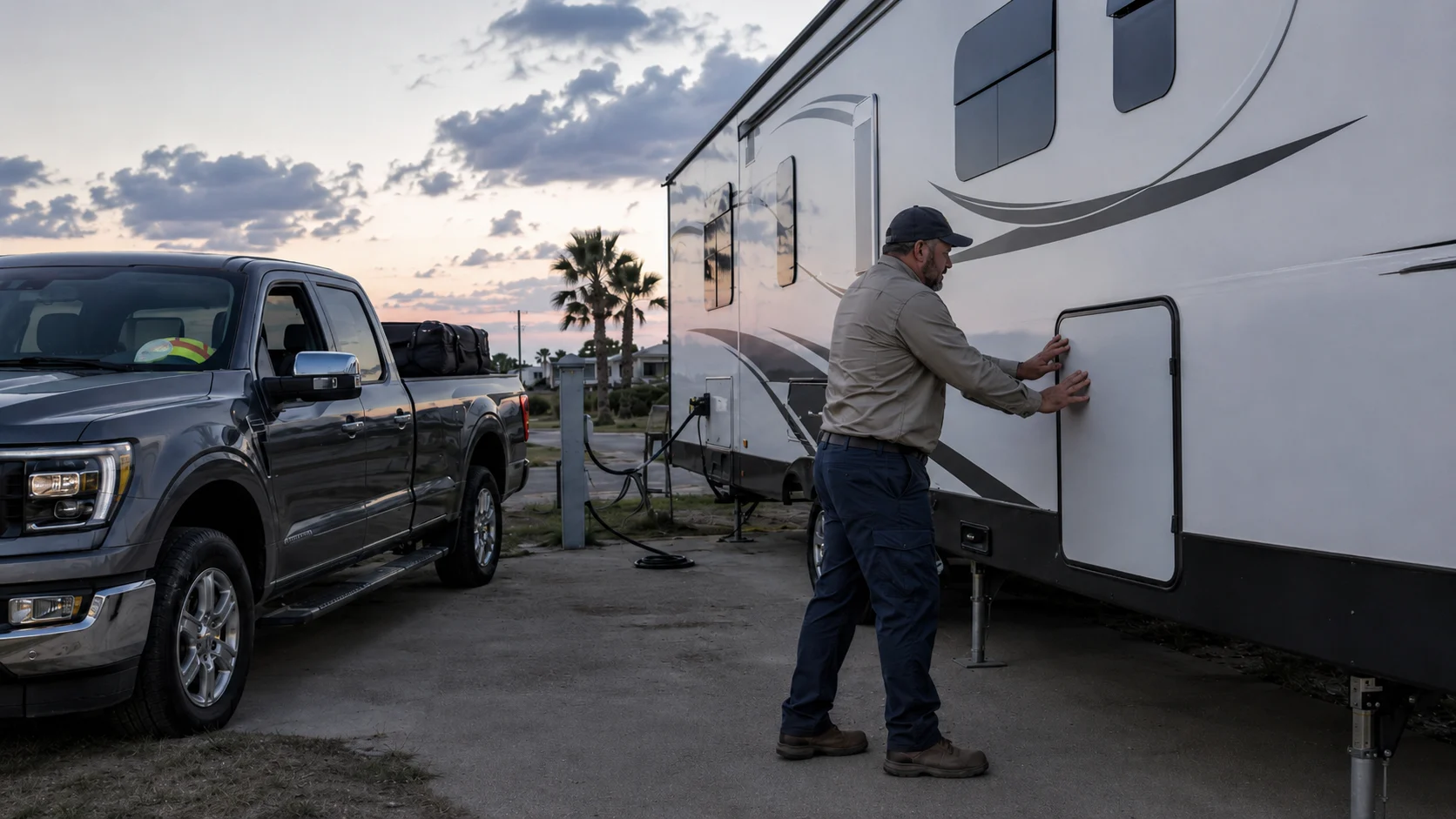
Before leaving your RV unattended for a 12-hour refinery shift, focus on one practical question: can the rig, the site, and anything remaining inside stay stable until you return?
This is not a complete maintenance inspection. It is a repeatable departure check designed to catch conditions that may become more serious while you are several hours away and unable to respond immediately.
Do not leave until an active leak, electrical warning, failed climate-control system, unsecured awning, unsafe weather condition, or unresolved pet-care problem has been addressed. A normal workday routine is useful only when the RV is already in safe operating condition.
Start With Conditions That Could Stop You From Leaving
Most departure checks take only a few minutes. A few findings should stop the routine and require action before the shift:
- An active water or sewer leak that cannot be isolated safely
- Smoke, a burning odor, electrical arcing, or an unfamiliar electrical warning
- A strong propane odor or a carbon-monoxide alarm
- A cooling failure when a person or pet would remain in unsafe heat
- Severe weather that requires sheltering, relocation, or evacuation decisions
- An awning, exterior compartment, or loose object that cannot be secured
- No reliable care or response plan for a pet that would remain inside
When the problem involves park-side water, sewer, power, or another site condition, contact the office. A problem inside the RV may require an RV technician, electrician, veterinarian, emergency services, or another appropriate professional. The park should not be treated as the repair provider for privately owned equipment.
Check the Forecast Through Your Expected Return Time
Do not check only the temperature and sky conditions at departure. Review the forecast through the end of the shift, including the time you expect to drive back to the park.
Pay particular attention to:
- Wind expected later in the day
- Severe-thunderstorm or tornado watches and warnings
- Heavy rain and flash-flood risk
- Extreme heat or a sharp temperature change
- The approximate time conditions may deteriorate
- Whether you will continue receiving alerts at the jobsite
The National Weather Service campground weather-safety guidance recommends maintaining more than one way to receive forecasts and warnings, knowing the appropriate sheltering plan, and acting immediately when a severe-weather warning is issued. Make sure Wireless Emergency Alerts are enabled on your phone, but do not rely on one alert method alone.
If the forecast raises a broader shelter, evacuation, flooding, or extended power-loss question, do not reduce the decision to securing the awning. Use a full weather plan and decide whether the RV should be left unattended at all.
Walk Around the Full Exterior
Inspect every side of the RV, not only the entrance. Secure anything that could move, leak, open, obstruct another site, or become a windborne object while you are away.
- Retract and secure the awning
- Store folding chairs, lightweight furniture, grills, mats, tools, packaging, and loose containers
- Latch exterior storage compartments and access panels
- Confirm that windows and roof vents are positioned appropriately for the forecast
- Move trash to the dumpster
- Keep hoses, cables, and equipment out of the internal road and neighboring sites
- Check for obvious water, sewer, or electrical problems around the pedestal and connections
At Stone Bridge, our current park policies require guests to keep assigned sites safe, clean, and orderly, use proper sewer connections, and place trash in the dumpster rather than leaving it outside the RV.
Do not create a universal rule that every slide-out must be retracted or every established utility connection must be disconnected before each shift. Those decisions depend on the RV, manufacturer guidance, the site setup, and expected conditions.
Separate Interior Systems Into Three Groups
A faster and clearer interior check is to separate equipment into three categories: what must be off, what may intentionally remain on, and what must remain functional.
Turn off before leaving
- Stovetop burners and the oven
- Food or cookware left heating
- Portable heaters
- Countertop heat-producing appliances that are not designed to run unattended
Intentionally leave operating only when needed
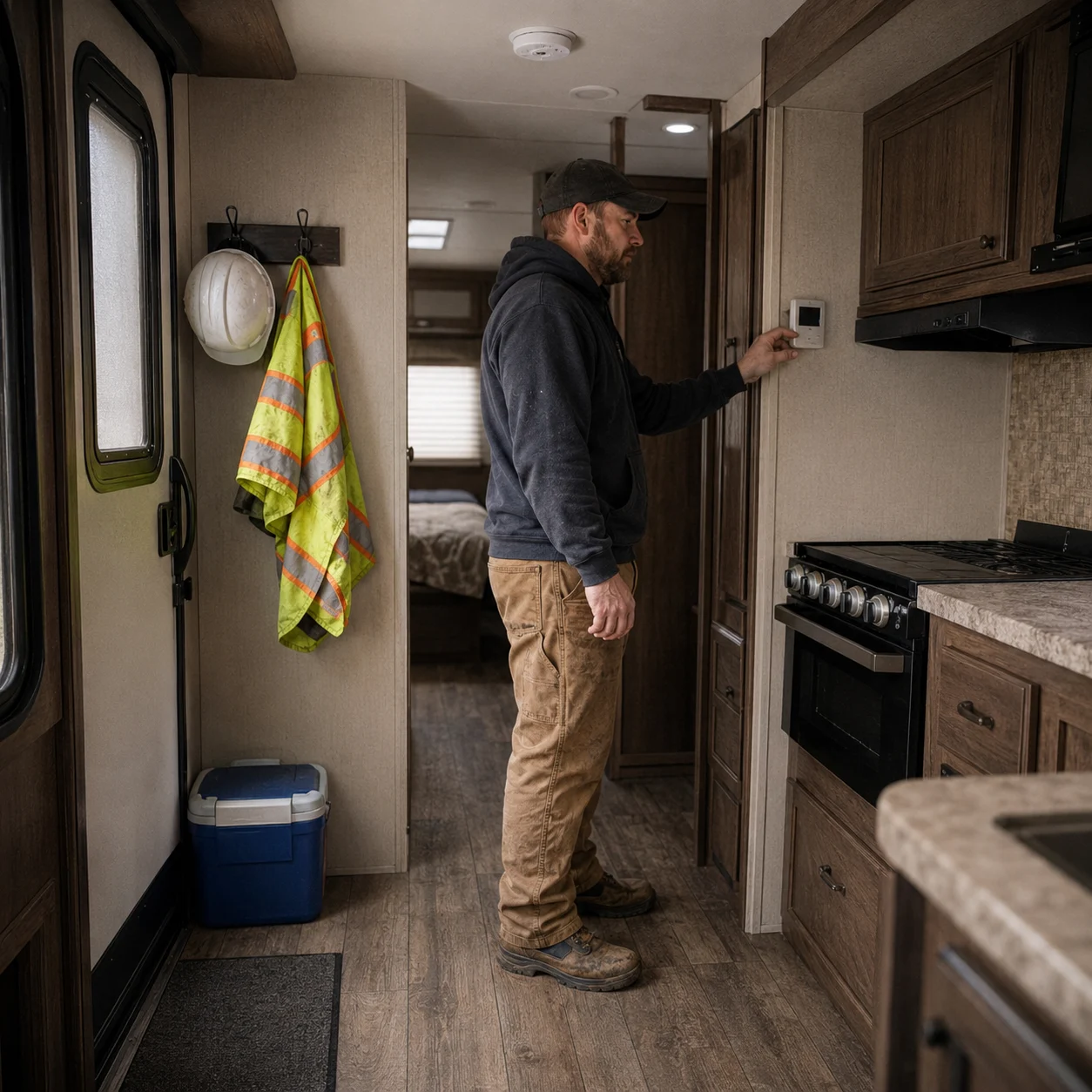
- Installed air conditioning or heating
- The refrigerator and other normal RV systems
- A remote temperature or power monitor, when part of the plan
For any system that will remain on, set it intentionally, verify that it is actually operating, keep supply and return vents clear, and do not ignore an unfamiliar warning or repeated shutdown.
Verify that safety devices remain functional
- Smoke alarms
- Carbon-monoxide alarms
- Any propane or system warning indicator installed in the RV
NFPA carbon-monoxide guidance explains that fuel-burning cooking and heating equipment can produce carbon monoxide when combustion is incomplete. A quick departure check does not replace alarm testing, maintenance, or professional evaluation of a warning.
A remote monitor can tell you that temperature or shore power has changed. It cannot restore power, repair the air conditioner, inspect the RV, or care for anyone inside.
Check for an Active Water or Sewer Problem
Look for a condition that should not continue unattended for the full shift:
- Fresh water pooling beneath the RV
- A drip or spray at the water connection
- A swollen hose, loose fitting, or displaced pressure regulator
- Moisture beneath a sink or near the toilet or shower base
- A sewer hose or support that has shifted
- A fitting that is no longer sealed
- An unfamiliar warning from the water heater or another connected appliance
Never leave a known leak operating because you hope it will remain minor. If the affected system can be isolated safely, follow the RV manufacturer’s instructions. If you are unsure, stop and obtain appropriate assistance.
There is no single rule requiring every guest to turn off the water supply before every workday. An inspected system may remain in its normal configuration. The decision should be based on the equipment, manufacturer guidance, site requirements, and the condition you observe—not an improvised action at the pedestal.
Do Not Treat Air Conditioning as the Complete Pet Plan
A 12-hour absence is substantial. An operating air conditioner does not by itself answer whether a particular animal can safely remain inside the RV for that period.
Before leaving, determine:
- Whether the animal can safely tolerate that length of time alone
- Who will provide bathroom, medication, feeding, or welfare checks
- Whether fresh water is available in a stable container
- How you will know if shore power or climate control fails
- Who can physically enter the RV and respond
- How that person will receive and return the key
- Which veterinarian or emergency clinic should be contacted if necessary
AVMA warm-weather pet-safety guidance recommends unrestricted access to fresh water and advises owners to understand the signs of heat stress. Whether a specific pet can remain alone for an extended shift should be discussed with the animal’s veterinarian and supported by a reliable in-person care plan when needed.
Stone Bridge permits up to two small, friendly, quiet pets per site. Pets must remain leashed outdoors and may not be left unattended outside. These park rules do not determine whether an animal can safely remain alone inside a private RV.
Build a Response Plan, Not Just a Monitoring Plan
Monitoring is useful only when an alert leads to a realistic action. Before leaving, decide who will respond to:
- A high-temperature notification
- A shore-power-loss alert
- A report of water leaking from the site
- A severe-weather warning affecting the park
- A message that a pet needs care
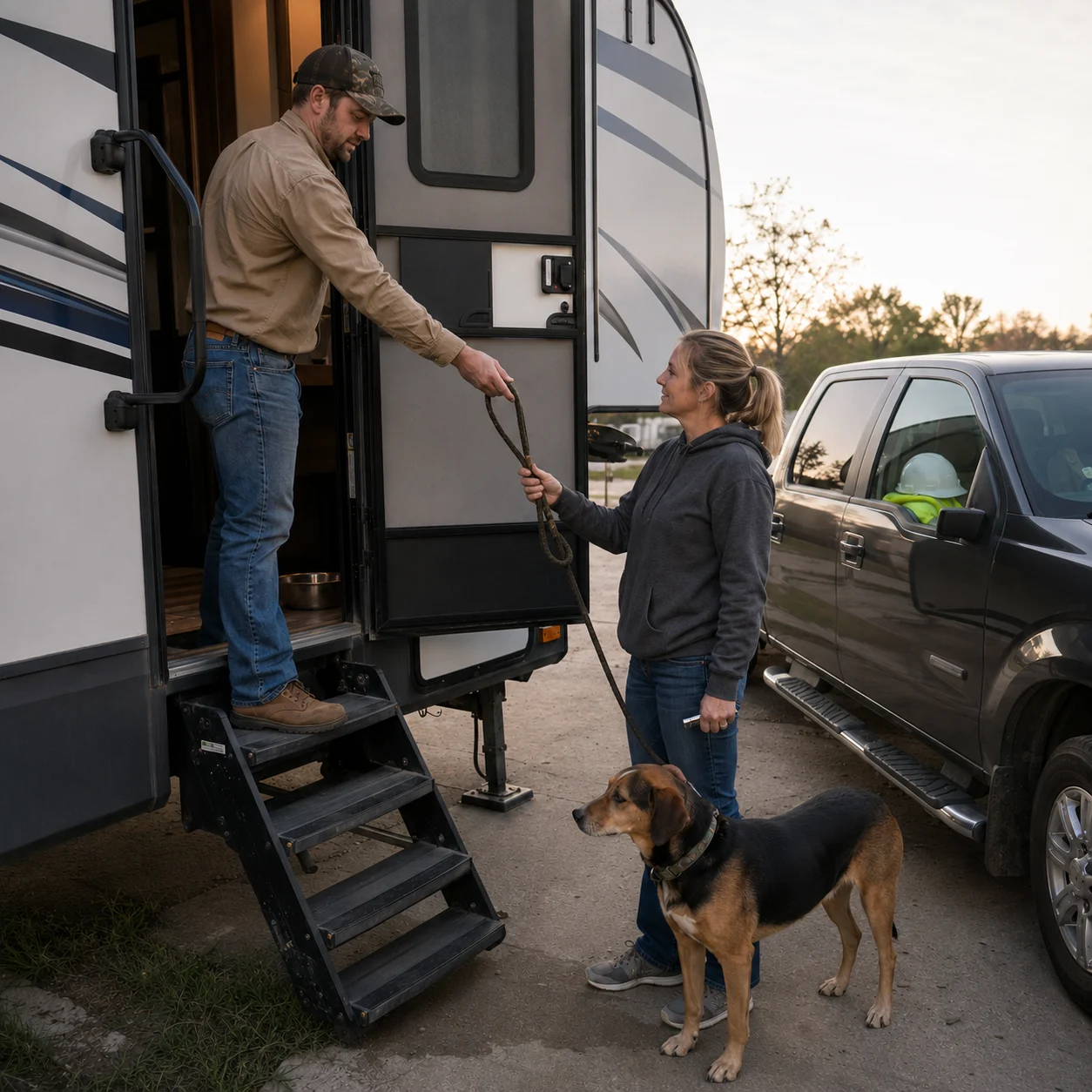
A practical response plan should identify one trusted local adult, the conditions under which that person may enter, what they are authorized to check, and how they will access the RV. Do not hide a key outside or create uncontrolled access to the site.
Do not assume that park employees can enter the RV, hold a private key, care for a pet, reset private equipment, or supervise a repair. Those services are not established by the public park policies and would require direct confirmation.
Save the park contact information for site-side concerns such as pedestal power, park water, sewer connections, external leaks, or an obstruction affecting the property. Interior appliance, pet-care, and privately owned RV-system problems require the appropriate personal contact or professional.
Use This Normal-Condition Departure Sequence
When no stop condition is present, use the same order before each long shift:
- Review the forecast through the expected return time.
- Walk around all sides of the RV.
- Retract the awning and store loose exterior items.
- Latch storage doors, windows, vents, and exterior panels as appropriate.
- Remove outdoor trash and clear the road and neighboring-site boundaries.
- Turn off cooking equipment, portable heaters, and unnecessary heat-producing appliances.
- Verify that intentionally operating climate control and monitoring equipment are working.
- Look for active water, sewer, electrical, or utility problems.
- Confirm the pet-care and response arrangement, when applicable.
- Enable alerts, lock the RV, and take the correct keys and phone.
This is a normal-condition departure scan, not a promise that every situation can be handled in ten minutes. If you discover a problem, stop the sequence and resolve the issue rather than rushing to preserve the shift schedule.
Leave the RV in a Condition That Can Remain Stable
The goal is not to inspect every RV component before every shift. It is to remove or respond to conditions that could become:
- A windborne object or blocked roadway
- A fire, electrical, propane, or carbon-monoxide hazard
- A costly water or sewer problem
- A dangerous temperature failure
- A pet-care emergency
- An incident that nobody is prepared or authorized to address
When the unresolved problem involves Stone Bridge property or a park-side utility connection, use our Contact page before leaving. When it involves the private RV, a pet, or a life-safety emergency, contact the appropriate technician, veterinarian, trusted person, or emergency service instead of expecting the park to solve it.
Frequently Asked Questions
There is no universal daily rule. Inspect the system and never leave a known leak operating. When water must be isolated, follow the RV manufacturer’s instructions and any park utility requirements rather than improvising at the connection.
Use the response plan established before the shift. Contact the trusted person authorized to check the RV or the appropriate service provider. If a pet or vulnerable person may be in danger, treat the alert as time-sensitive. A notification without someone able to respond is not a complete safety plan.
Do not assume that staff can enter a private RV, hold a key, care for an animal, or reset private equipment. Confirm any requested assistance directly in advance and maintain your own authorized local response plan.