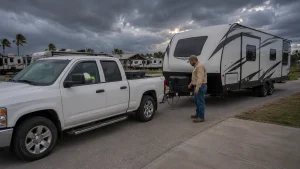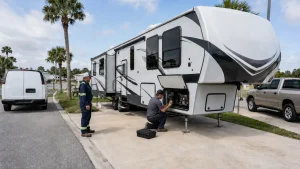
Moving into an RV park for more than a short visit feels very different from booking a quick camping trip. A weekend stay usually comes with a simple mindset: arrive, settle in briefly, enjoy the stop, and move on. A longer stay is different. When you are planning to stay for a week, several weeks, or even longer, the focus shifts from short-term convenience to everyday livability.
That is why first-time long-stay guests often have a lot of questions. They want to know how site setup works, what kind of utility connections they need, how daily life will feel, and what they should bring without overcomplicating the move. They may also wonder whether RV living is the right fit at all, or if a cabin would make more sense for their situation.
The good news is that long-stay RV park living becomes much easier when you arrive with the right expectations. A little preparation removes a lot of confusion.
Long-Stay RV Park Living Is Different From Weekend Camping
A longer stay changes the way you think about the space.
On a weekend trip, you can overlook small inconveniences because you will be gone soon. On a longer stay, those same issues start to matter. The way your site is laid out matters more. Utility access matters more. Storage matters more. Comfort matters more. Even your daily routine becomes part of the equation.
That is one of the biggest differences between short-term camping and long-stay RV park living. You are no longer just stopping somewhere. You are building a temporary living routine.
That means daily routine matters more. You need a setup that works when you wake up, get ready, cook, clean, rest, and repeat that schedule every day.
It also means comfort matters more. Bedding, airflow, seating, organization, and convenience all start to affect your quality of life in a bigger way.
Site setup matters more, too. Hookups, power compatibility, site layout, and access are not just checkboxes. They shape how easy or frustrating your stay will feel.
And finally, long-term convenience becomes important. The goal is not just to park successfully. The goal is to live comfortably and practically for the length of your stay.
What to Confirm Before You Arrive
The easiest way to reduce stress is to confirm the basics before you show up. First-time guests often assume they will figure things out on arrival, but longer stays go much more smoothly when the details are handled in advance.
Site Type
Not every site feels the same in everyday use. Some are easier to access. Some feel more convenient depending on the size and layout of your RV. Before arriving, it helps to understand what kind of site you are reserving and whether it fits your rig and your comfort needs.
For a longer stay, do not think only about getting parked. Think about how the site will function for daily life.
Full Hookup Availability
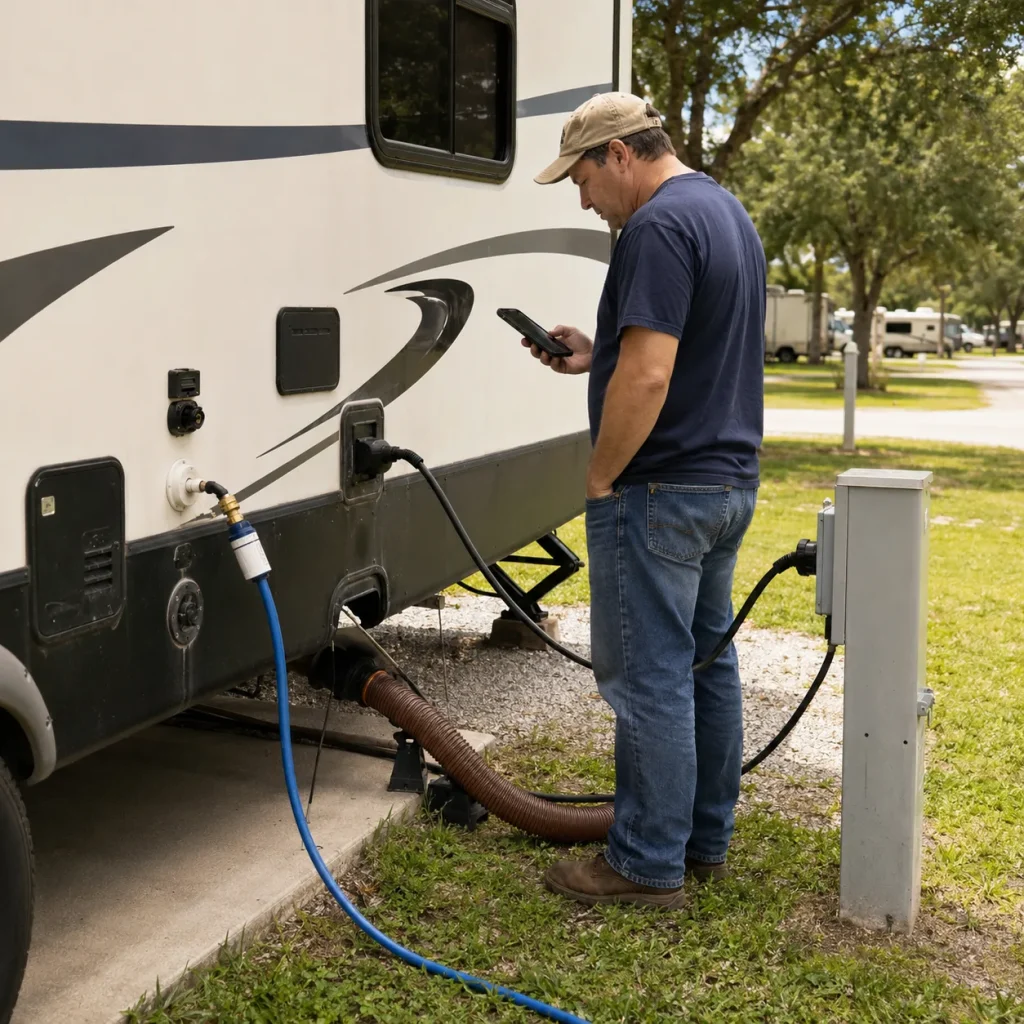
If you are staying for more than a quick visit, full hookups can make a major difference. Having water, sewer, and electric access in one site makes everyday living much easier and more manageable.
Before arrival, confirm what hookups are available and what that means for your stay. A longer visit usually works best when the site supports regular daily use, not just short-term parking.
Power Compatibility
One of the most common mistakes first-time guests make is not checking power needs ahead of time. Your RV’s power requirements matter, and they should match the service available at your site.
This is something to confirm before you pull in. Doing so helps you avoid confusion, setup delays, and preventable problems after arrival.
Length of Stay Options
It is also important to confirm the stay structure itself. Are you booking nightly, weekly, or monthly? Are there options if your stay needs to extend? The answers affect planning, budgeting, and peace of mind.
If you expect your schedule could shift, it is better to ask in advance than assume flexibility later.
Pet Policy
If you are traveling with pets, make sure you understand the park’s pet rules before arrival. Even in pet-friendly environments, it helps to know the expectations early so you can plan more confidently.
For longer stays, this matters even more because pets become part of your daily routine, not just part of the trip.
Cabin vs RV Site Choice if Undecided
Some guests are still unsure whether they should book an RV site or choose a cabin instead. That is a worthwhile question to settle before arrival.
If you already have an RV and are comfortable managing hookups, an RV site may fit naturally. If you want a simpler temporary stay with less technical setup, a cabin may be the better choice. The best decision is the one that makes day-to-day life easier, not harder.
What Daily Life Usually Involves
First-time guests often imagine RV park living as a simplified version of travel. In reality, long-stay life becomes more like a small, structured version of home.
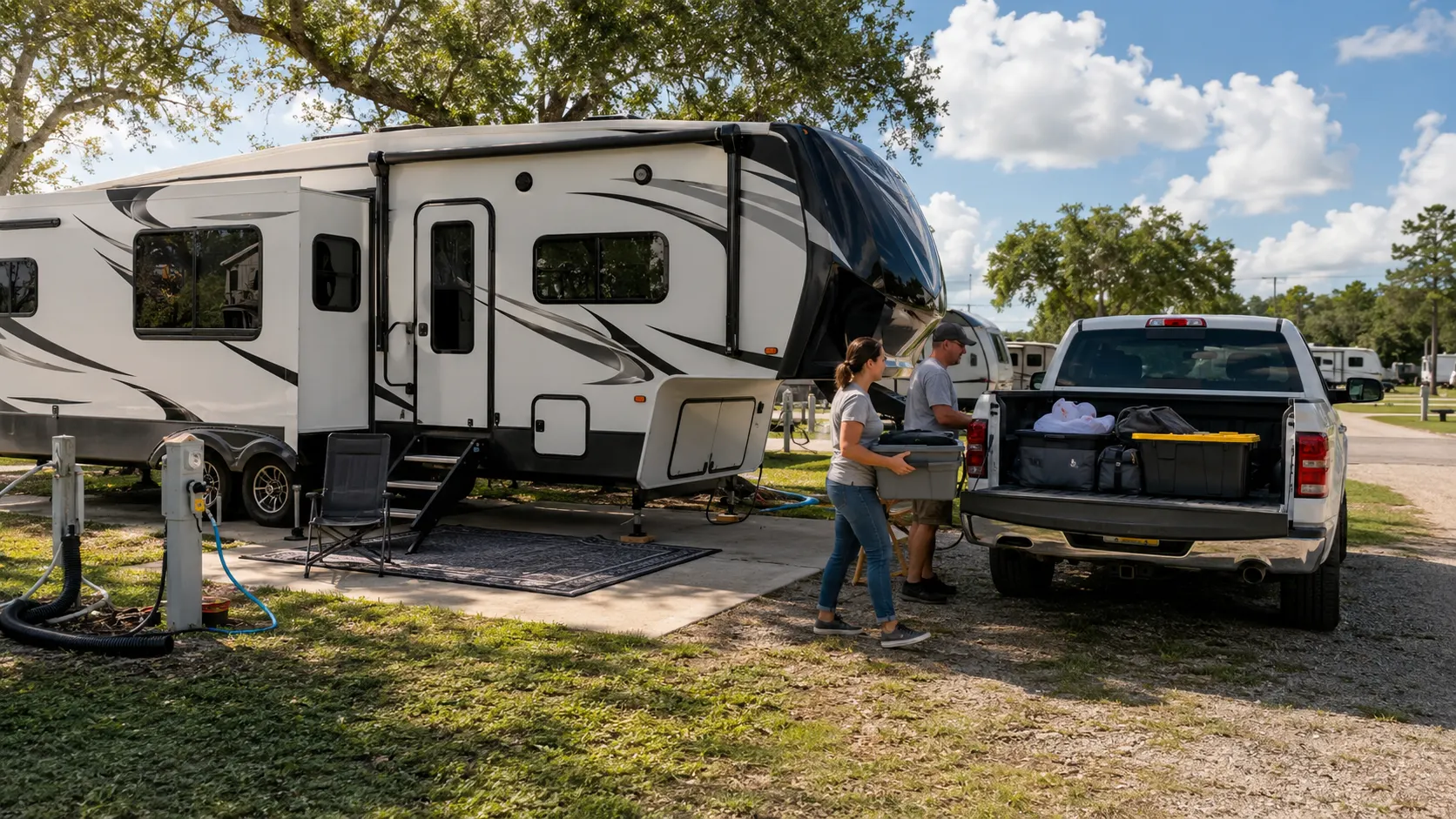
You will spend time on parking and setup, especially at the beginning. That includes getting the RV positioned, making sure everything feels stable, and setting up what you need for daily living.
You will also manage utilities. Water, sewer, and electric connections are a normal part of the setup, and understanding them early makes life much easier.
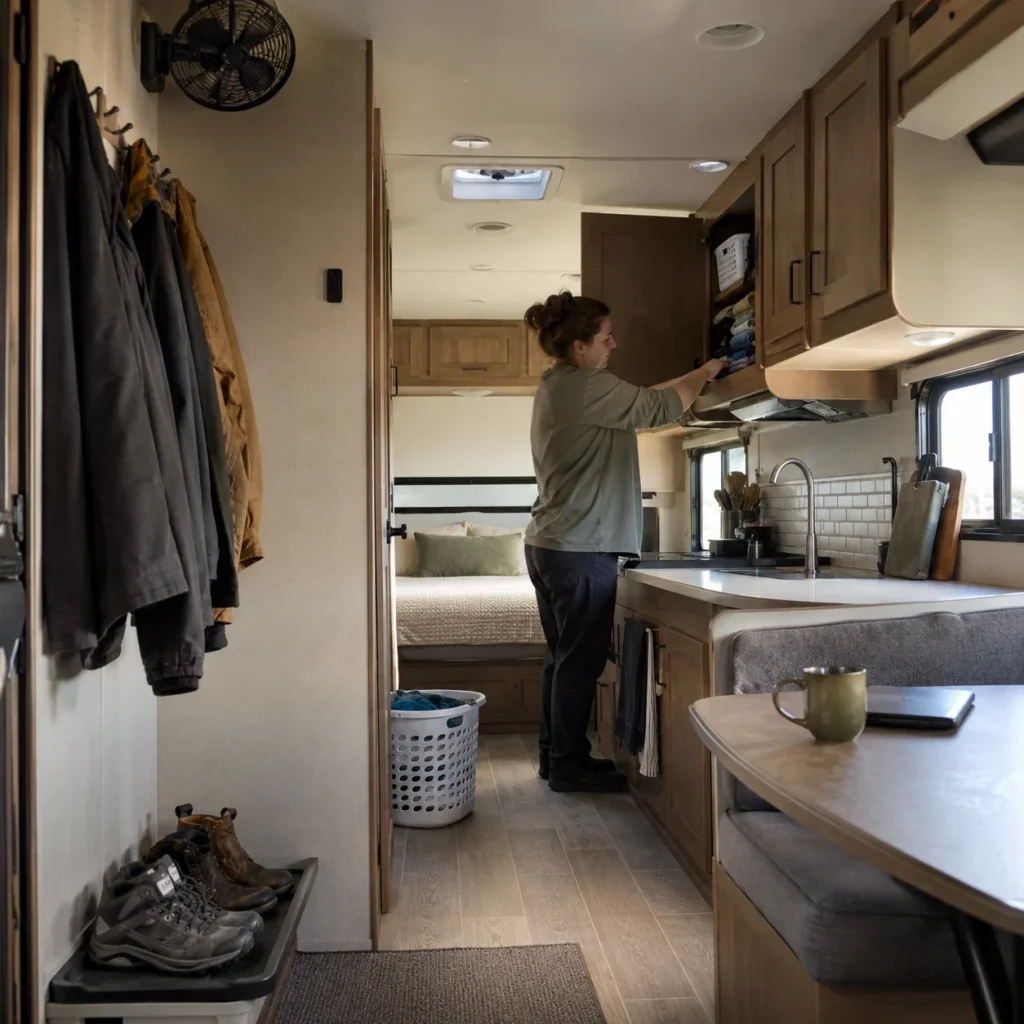
Then there is the everyday side of things: cooking, laundry, bathing, and storage. These are ordinary routines, but they require a little more intention in a smaller space. Organization becomes more important. Habits become more visible. The things you use every day should be easy to reach and easy to put away.
For many guests, one of the biggest adjustments is the work and rest rhythm. In a smaller environment, good routine matters. A well-planned setup helps you move through the day more smoothly, whether you are staying for work, transition, or practical housing reasons.
The more you treat the space like a temporary home base instead of a short camping stop, the easier the stay tends to feel.
Common First-Time Mistakes
Most first-time problems are not major. They usually come from avoidable assumptions.
Not Understanding Hookup Needs
Many guests hear terms like “full hookup” without fully understanding what they will need on arrival. That can lead to confusion and unnecessary stress. Before your stay begins, make sure you understand what your site provides and what your setup requires.
Bringing Too Much
When people prepare for a longer stay, they often assume they need to bring everything they own. In reality, bringing too much can make a smaller space harder to manage. Long-stay RV living works better when you pack for your actual routine instead of every possible scenario.
Underestimating Storage Limits
Storage looks different in an RV or compact stay environment. Guests sometimes realize too late that clutter builds quickly and makes daily life harder. The more practical your packing and organization are, the more comfortable the stay becomes.
Not Checking Power Requirements
Power mismatch is one of the most preventable issues in RV setup. Before arrival, know what your RV needs and what the site provides. This one step can save time and frustration.
Assuming Every Site Works the Same Way
Not every RV site is identical. Layout, hookups, access, and convenience can vary. Guests who assume every site works exactly the same often feel more overwhelmed than they need to. A few clarifying questions in advance can make a big difference.
How to Make a Longer Stay More Comfortable
Comfort during a longer stay usually comes from simple habits, not from making the setup complicated.
Start by creating routines. When you know where things go and how your day flows, the space becomes easier to live in.
It also helps to organize small spaces well. Use only what supports daily life. Keep essentials accessible. Avoid letting clutter build up. A little structure saves a lot of stress.
Try to bring only useful essentials. Focus on what you actually need for sleeping, cooking, working, cleaning, and staying comfortable. Extra items often feel helpful at first but become frustrating when they take up valuable space.
You should also prepare for utility connection properly. The smoother your arrival setup is, the faster the space begins to feel livable.
Most importantly, keep your setup simple. Long-stay comfort usually comes from clarity and routine, not from overloading the space with too much gear or too many unnecessary items.
When a Cabin May Be the Better Choice
RV living is not automatically the right fit for every long-stay guest.
For some people, a cabin is simply the better choice. It requires no RV setup, which removes a major layer of preparation. There is also less technical planning, since guests do not need to think through hookups, power compatibility, or the mechanics of RV living.
Cabins may be especially helpful for people who want a simple temporary place to stay without the learning curve of managing an RV. If the goal is comfort, convenience, and low-maintenance living, a cabin can sometimes be the easier answer.
That does not make one option better than the other across the board. It just means the best fit depends on your situation, your comfort level, and how much setup responsibility you want to take on.
Frequently Asked Questions
Yes. Weekend camping is usually temporary and flexible, while long-stay RV park living is more about daily comfort, routine, utilities, and practical setup. The longer the stay, the more those details matter.
You should confirm your site type, hookup availability, power compatibility, stay length options, pet policy if needed, and whether an RV site or cabin is the better fit for your situation.
Full hookups usually make everyday living easier because they support regular use of water, sewer, and electric service. For longer stays, that convenience matters much more than it does on a short visit.
A very common mistake is arriving without fully understanding hookup needs or power requirements. That can create unnecessary confusion right at check-in and setup time.
Not necessarily. It is usually better to bring useful essentials instead of overpacking. Too much stuff can make a smaller living space feel crowded and harder to manage.
Yes. A cabin can be the better choice for guests who want a simpler temporary stay with less setup responsibility and fewer technical details to manage.
Daily life often includes managing utilities, cooking, laundry, bathing, storage, and building a routine that works well in a smaller living space.
Create routines, organize the space well, bring only what you need, understand your utility setup before arrival, and keep the overall setup simple.
Final Thoughts
First-time guests usually do much better when they arrive with the right expectations.
Long-stay RV park living is not difficult just because it is different. It becomes much easier when you understand that it is about daily life, not just temporary parking. Once you think in terms of routine, comfort, utilities, storage, and simplicity, the whole experience starts to make more sense.
For some guests, an RV site is the right fit. For others, a cabin may be more practical. Either way, basic preparation goes a long way. The better you understand your stay before arrival, the smoother and more comfortable the experience will be.
If you are planning a weekly or monthly stay, it is worth taking a little time to confirm what setup will work best for you. That small step can make your entire stay feel more manageable from day one.