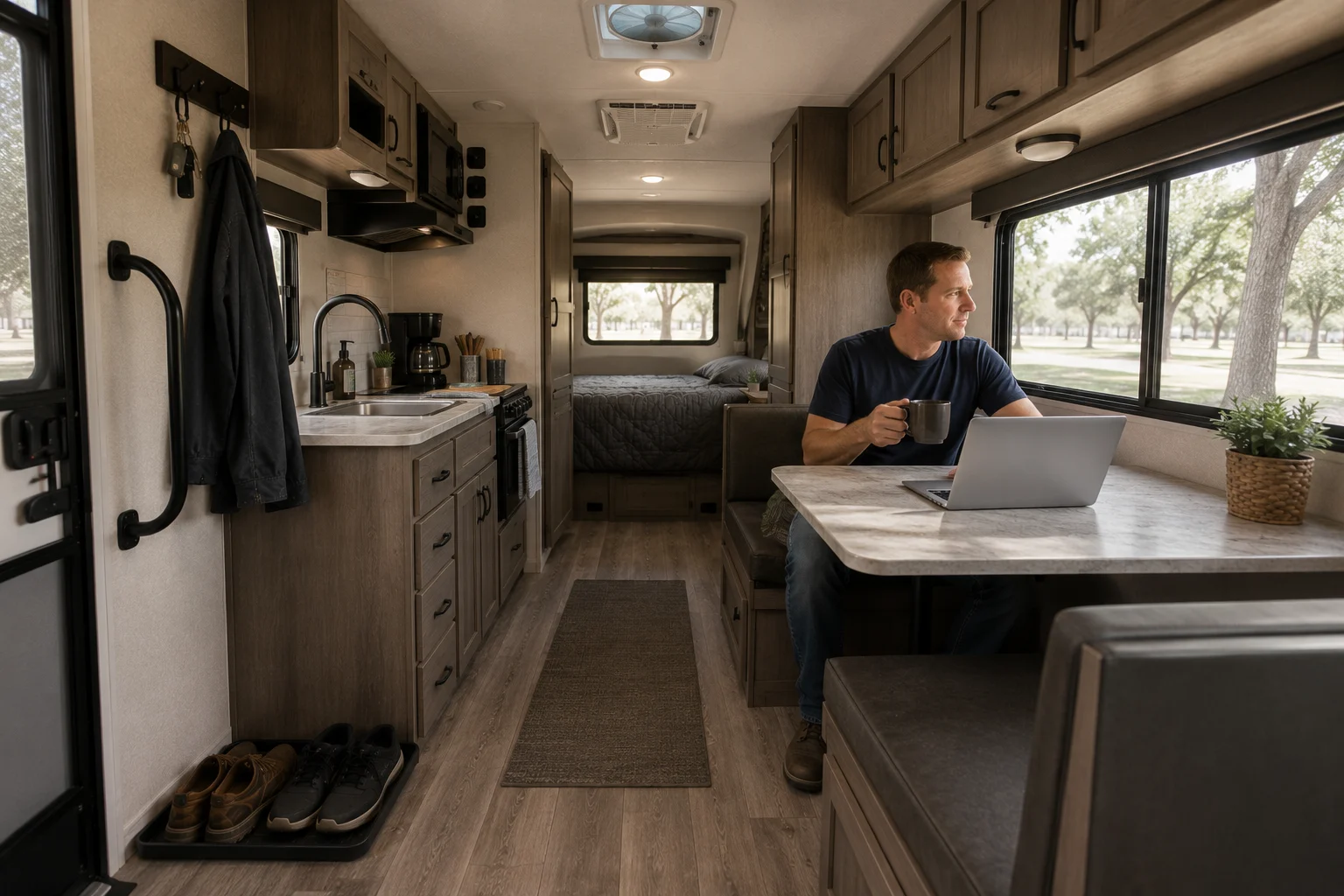
When you stay in an RV park for more than a few days, comfort starts to matter more than novelty. A short visit can feel manageable even if the setup is not perfect. But once your stay stretches into a week or a month, the little details begin to shape the whole experience.
That is when RV park life shifts from “temporary stop” to “daily living.” The question is no longer just whether the site works. The real question becomes whether the space feels organized, stable, and easy to live in every day.
The good news is that comfort usually does not come from adding more things. It usually comes from making smarter use of the space you already have. A few small adjustments can make a major difference in how your RV feels during a longer stay.
Build a Setup Around Daily Routine
One of the biggest keys to long-stay comfort is building your setup around the way you actually live. Many guests arrange their space based on how it looks on arrival day, but the better approach is to arrange it around routine.
Think about your morning flow first. Where do you get dressed? Where do your daily toiletries go? Where do you keep the things you reach for first every morning? When those items are easy to access, your day starts more smoothly.
Then think about work preparation. If you are leaving for work, getting ready for tasks, or following a repeated schedule, your essentials should support that rhythm. Clothes, shoes, bags, chargers, and other daily-use items should be easy to reach and easy to put back.
Your meal rhythm matters too. Cooking feels much easier when your most-used items are already set up around normal habits rather than stored randomly wherever they fit. That does not require a perfect kitchen setup. It just requires a thoughtful one.
The same is true for cleanup timing. In a smaller living space, waiting too long to reset the area usually makes things feel more stressful than they need to be. When cleanup becomes part of your daily rhythm instead of a delayed chore, the whole space stays more manageable.
And then there is sleep consistency. Weekly and monthly stays feel more stable when the sleeping setup supports actual rest. Bedding, airflow, and the general calm of the space all matter more over time than they do during a quick trip.
A comfortable RV stay is rarely about having more room. It is usually about having a routine that works well inside the room you have.
Keep the Space Organized With Simple Systems
When RV living starts to feel frustrating, the problem is often not the size of the space. It is usually the lack of a simple system.
Assign a Place for Essentials
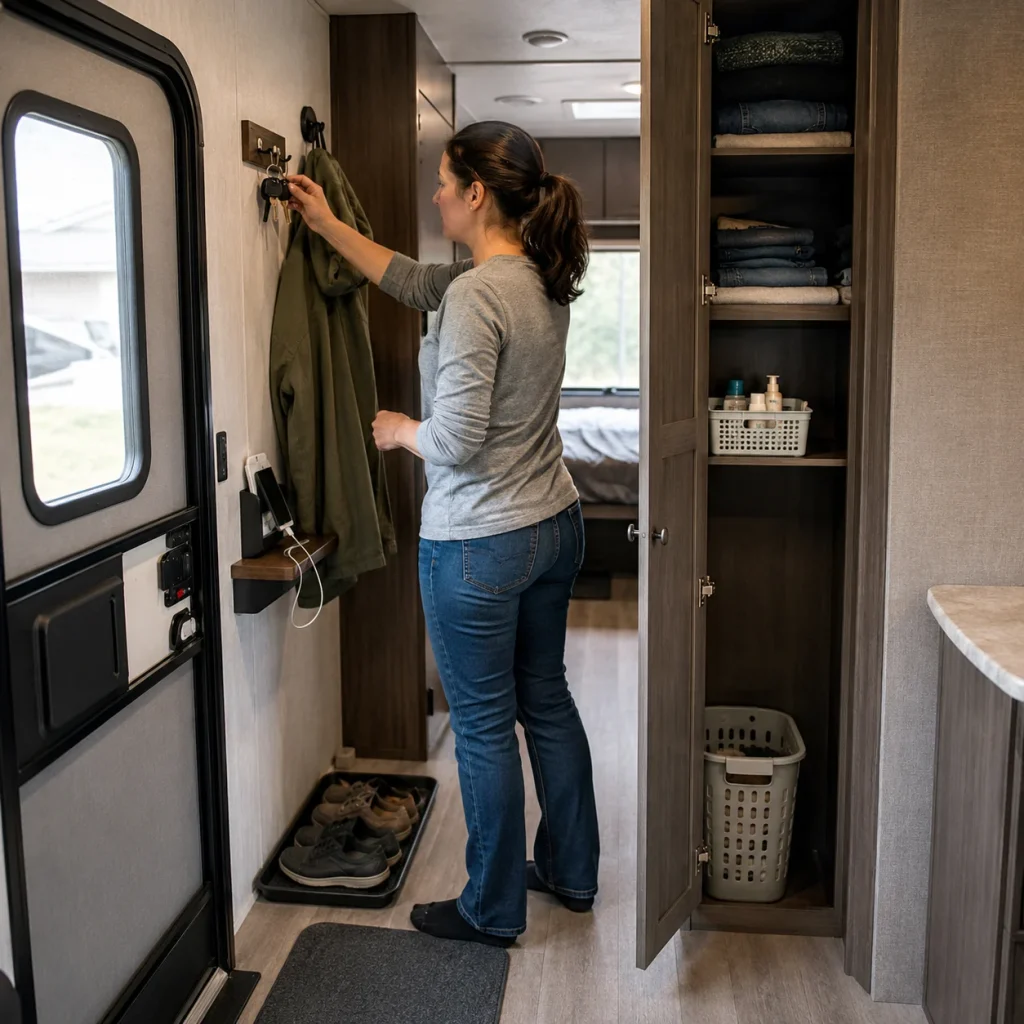
Daily-use items should always have a home. If your keys, chargers, toiletries, work items, food basics, and cleaning supplies constantly move around, the RV will start to feel harder to manage than it really is. Assigning fixed spots to essentials helps the space feel stable instead of chaotic.
Use Vertical Storage Where Possible
In a compact living space, going upward often works better than trying to spread out. Vertical storage can help free up counters, seating areas, and floors, which makes the space feel more open and less crowded.
Avoid Clutter Build-Up
Clutter tends to grow quickly in an RV because there is not much extra room for disorder to hide. One small pile becomes two. A few loose items on the counter turn into a daily obstacle. Staying ahead of clutter is much easier than clearing it after it builds up.
Reassess What You Really Use
One of the smartest things long-stay guests can do is periodically ask: “Am I actually using this?” If the answer is no, it may not need to stay in your active space. Comfort often improves when the RV contains only what supports real daily life.
Improve Comfort Without Overcomplicating the Space
A more comfortable RV does not have to become a more crowded RV. In fact, the most comfortable spaces are often the simplest ones.
Start with lighting. Good lighting can change the feel of a space more than people expect. A poorly lit RV may feel smaller, less calm, and less comfortable. Small improvements in how the space is lit can make the environment feel more usable and more welcoming.
Bedding also makes a major difference. During a weekly or monthly stay, sleep quality affects everything else. If the bedding setup is weak, the stay may start to feel harder than it actually is.
Then there is airflow. A space that feels stuffy or stagnant becomes tiring over time. Comfort improves when the RV feels breathable and livable throughout the day.
Seating matters too, especially on longer stays. Even small adjustments to how and where you sit can make daily life feel less cramped.
And finally, think in terms of small convenience upgrades. The goal is not to add more and more things. The goal is to make the space function better with a few practical improvements that support your actual routine.
Make Cooking and Food Storage Easier
Food is one of the fastest ways to either improve or complicate RV life.
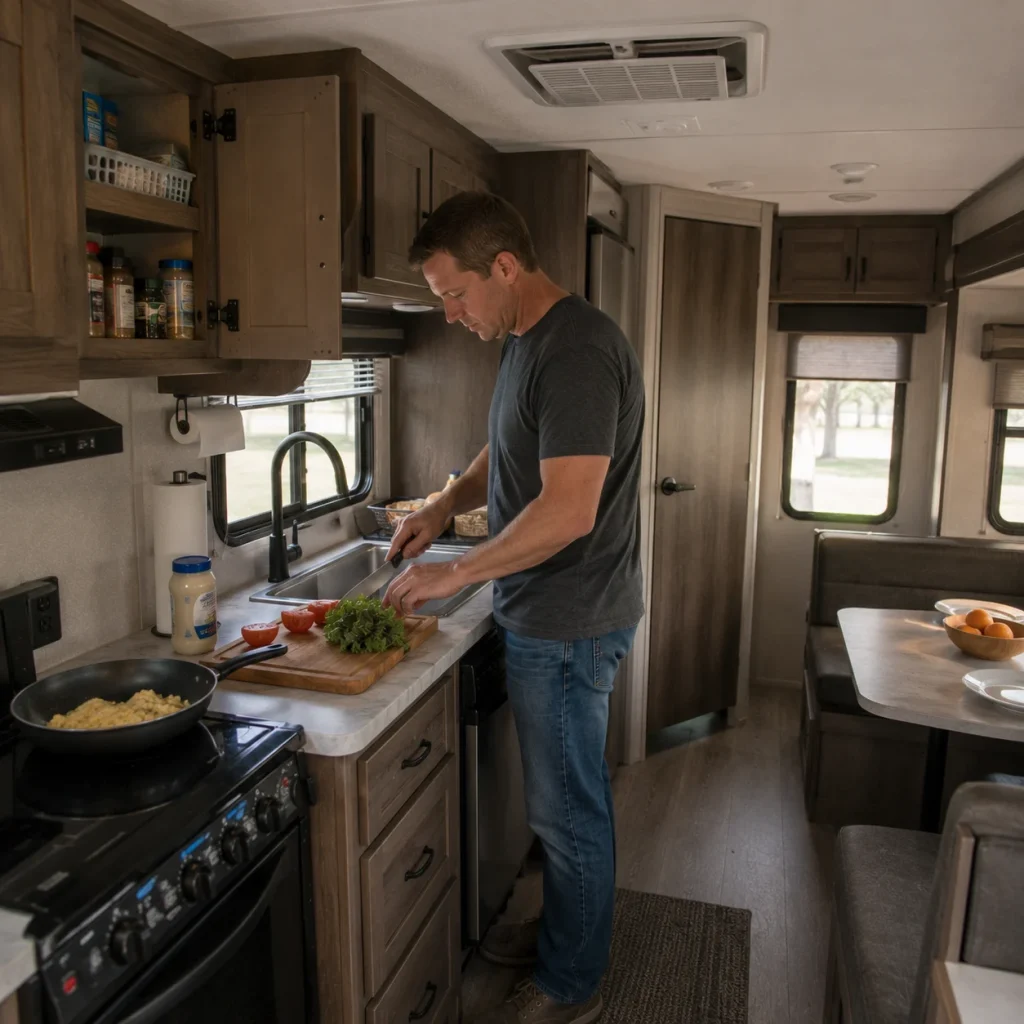
The best starting point is simple meal prep. Weekly and monthly stays become easier when meals are realistic, repeatable, and built around the space you actually have. Long-stay comfort usually comes from simplicity, not from trying to recreate a full traditional kitchen.
That also means thinking through limited-space planning. In an RV, food storage needs to be intentional. When the items you use most are easy to access, cooking feels much less frustrating.
A helpful rule is to focus on keeping frequently used items accessible. If your daily essentials are buried behind less useful items, even small tasks begin to feel harder. The more your setup matches your real habits, the more comfortable your stay becomes.
Keep Laundry and Cleanup Manageable
Laundry and cleanup are easy to ignore during a short stay, but they become important quickly during a longer one.
The best way to handle both is to create a rhythm. Instead of waiting until things pile up, build small resets into your normal routine. This keeps the RV from feeling like it is constantly falling behind.
It also helps to avoid pile-up wherever possible. Laundry, dishes, work clothes, and random daily items all become more stressful when left unattended in a smaller space. Keeping up with them gradually is usually much easier than trying to fix everything at once.
You should also try to simplify supplies. A long-stay setup works better when you are not juggling too many products, tools, or systems. The fewer barriers there are to cleaning up and staying organized, the more likely those habits are to hold.
Adjust the Space for Real Life, Not Ideal Life
One of the most useful shifts in long-stay RV living is letting go of the “ideal” setup and focusing on the one that actually works.
That starts with being realistic about habits. If you always drop your keys in the same place, make that place intentional. If your shoes naturally collect near the door, build around that instead of fighting it every day. Comfort improves when the setup supports how you really live.
It also helps to reduce friction in everyday routines. The easier a routine is to maintain, the more stable the space feels. If something is awkward every single day, it is worth adjusting.
Most importantly, prioritize function over perfection. Weekly and monthly stays feel better when the RV works well, even if it does not look perfectly arranged at every moment. A realistic, usable setup is far more valuable than one that looks good but creates daily frustration.
Cabin Guests Can Use These Same Comfort Principles Too
These comfort ideas are not only helpful for RV guests. Cabin guests can benefit from the same mindset as well.
Routines still matter in a cabin stay. The more consistent the daily flow feels, the easier temporary living becomes.
Organization matters too. Even when the setup is simpler than an RV, a well-organized cabin stay still feels calmer and easier to manage.
Simpler packing is another benefit. When guests bring what they actually need and avoid overcomplicating the space, the stay becomes more comfortable from the start.
And most of all, these principles support stability during temporary stays. Whether someone is in an RV or a cabin, comfort usually comes from systems that make everyday life easier.
Frequently Asked Questions
Because longer stays turn the RV into your day-to-day living space. Small inconveniences that are easy to ignore for a night or two become more noticeable when they affect your routine every day.
Start by building your setup around your real daily routine. Focus on sleep, food, cleanup, work prep, and keeping essentials easy to access.
Assign fixed places to essentials, use vertical storage where possible, avoid clutter build-up, and regularly reassess what you actually use.
No. Most of the time, comfort comes from better systems rather than more stuff. Small improvements in lighting, bedding, airflow, and organization often help more than buying additional gear.
Simple meal planning, practical food storage, and keeping frequently used kitchen items easy to reach can make a big difference.
Create a rhythm instead of waiting for messes or laundry to pile up. Small, regular resets are usually easier than large catch-up sessions.
Because the most comfortable setup is one that supports your actual habits. A realistic system is easier to maintain and reduces daily frustration.
Yes. Routines, organization, simpler packing, and practical daily systems can make cabin stays more comfortable as well.
Final Thoughts
Weekly and monthly stays become more enjoyable when the space supports real daily life.
That is the real goal. Not just to get through the stay, but to make it feel workable, organized, and steady. The most comfortable long-stay setups are rarely the ones with the most gear or the most complicated arrangements. They are the ones built around routine, organization, and practical daily use.
When you assign clear places for essentials, keep clutter under control, improve comfort in simple ways, make cooking easier, stay on top of laundry and cleanup, and shape the space around real habits, the whole stay becomes smoother.
Comfort is usually the result of simple systems, not more stuff. And when those systems are in place, RV park life tends to feel much easier week after week.