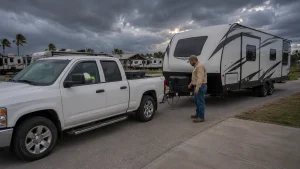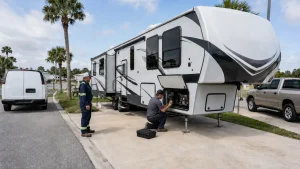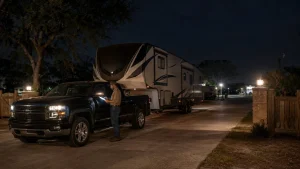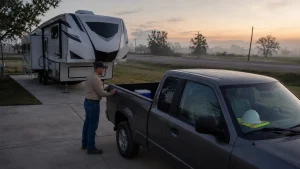
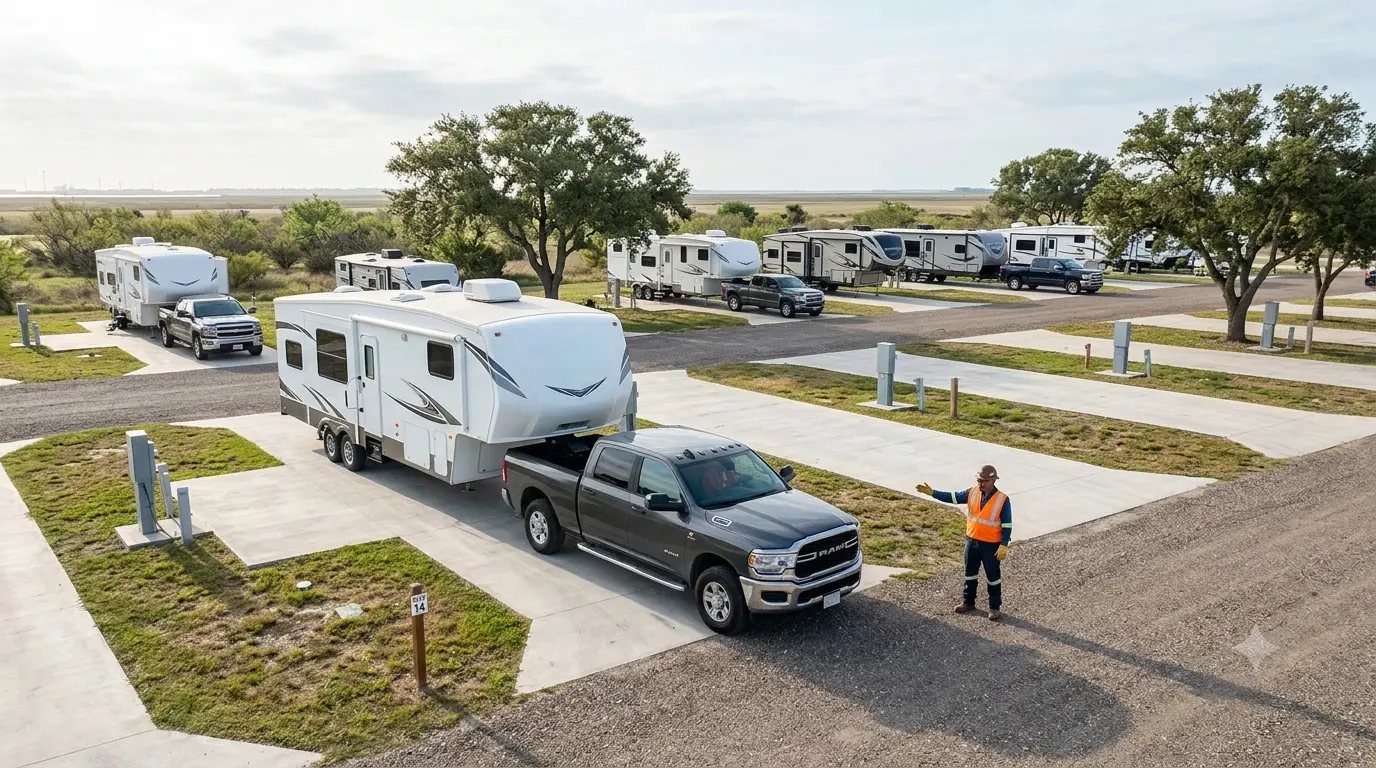
Start researching RV sites as soon as the likely work corridor and arrival week become reasonably clear. Do not wait for the final project completion date before you begin asking about availability.
The practical sequence is simple: research when the location becomes likely, contact parks when you can describe your rig and expected stay, reserve when the reporting date is firm enough and the terms are acceptable, and reconfirm before travel.
There is no single 30-, 45-, or 60-day rule that fits every turnaround worker. The right timing depends on how difficult your RV setup is to match, how fixed the assignment has become, and how much flexibility the reservation provides if the project changes.
Turnaround Demand Is Project-Specific, Not One Fixed Season
Refinery and plant projects do not create one universal RV-booking season across Texas. Availability is usually affected by the specific work corridor, the size of the project, overlapping assignments, and the number of workers arriving within the same period.
The spaces most likely to become difficult to match are not necessarily every open pad. They are the sites that meet a particular combination of needs, such as:
- Longer pads for fifth wheels and motorhomes
- Pull-through access for larger or less maneuverable rigs
- Room for a work pickup and approved additional vehicles
- Nearby sites for several crew members
- Availability for the full expected assignment rather than only part of it
That is why the best time to begin is when the assignment becomes likely enough to identify the work area—not when every project date is perfectly final.
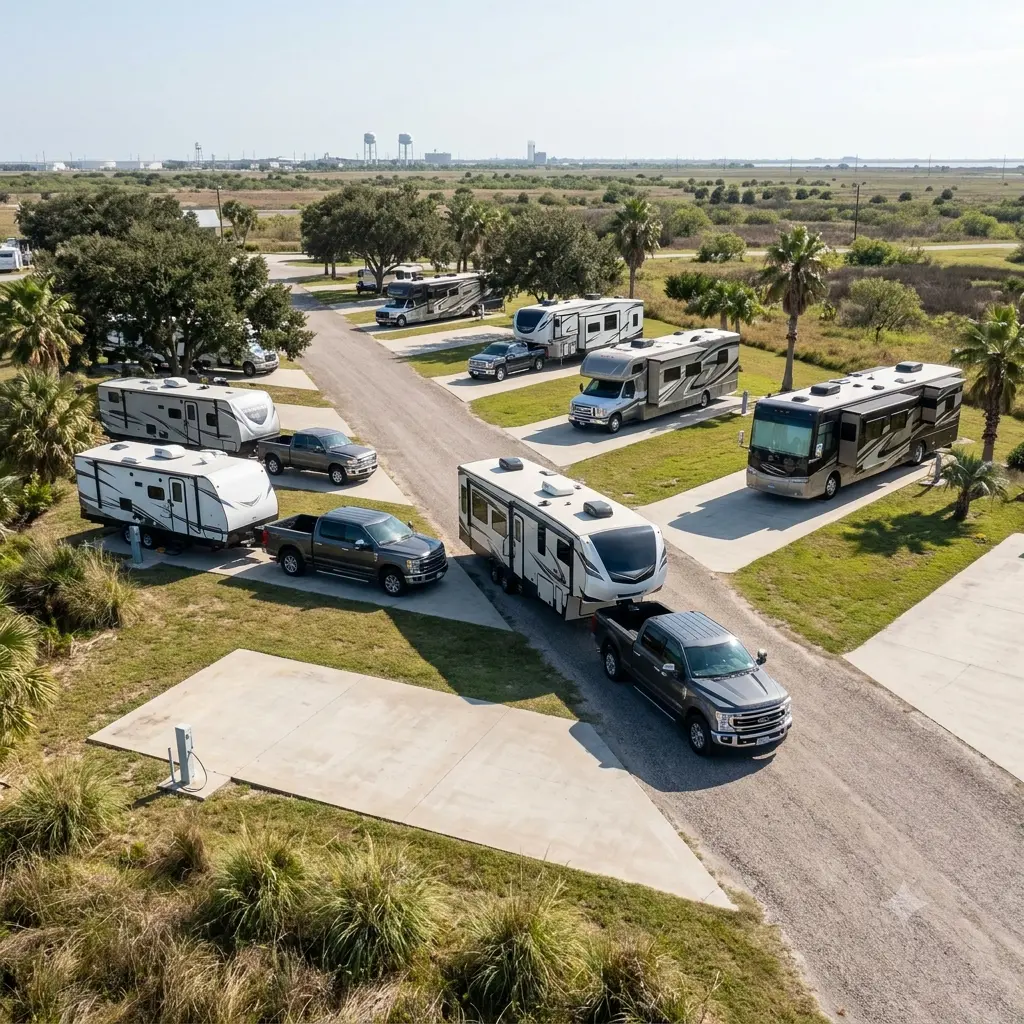
Use Four Booking Triggers Instead of One Calendar Number
1. Start researching when the work corridor becomes likely
At this stage, you may know the likely plant area or industrial corridor without having a final gate, orientation date, or completion date. That is enough to begin identifying realistic RV parks, but it may be too early to make a financial commitment.
Before you search, confirm the basic details that affect site compatibility:
- Likely facility, plant area, or reporting corridor
- Approximate orientation or mobilization week
- RV type, length, and width
- Slide-out requirements
- Electrical service required by the RV
- Number of vehicles or trailers
- Need or preference for back-in or pull-through access
If you are unsure about the electrical requirement, confirm it from the RV documentation or review our 30-amp versus 50-amp RV service guide before requesting a site.
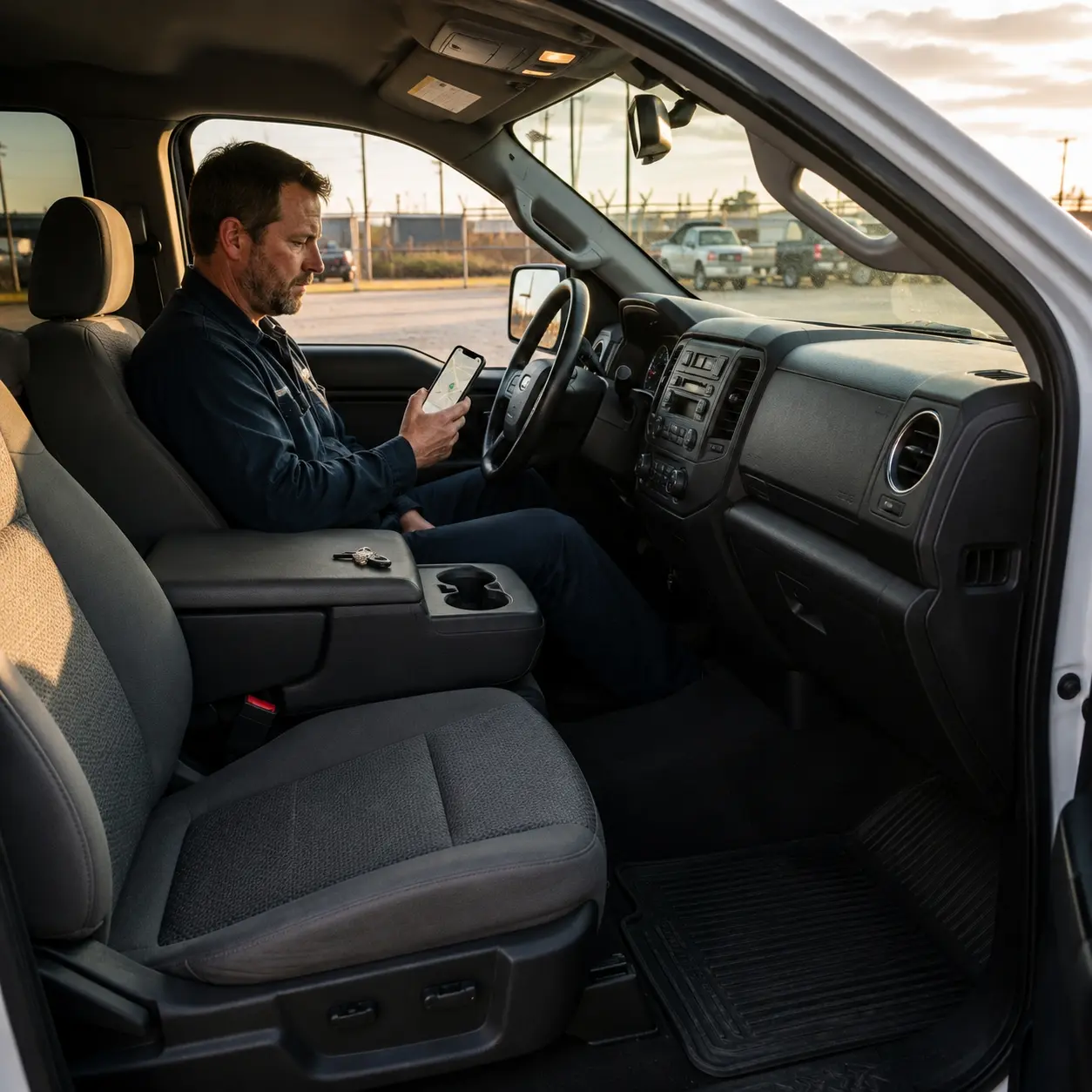
2. Contact parks when you can describe the stay clearly
You do not need a perfectly final project schedule before making contact. You need enough information for the park to determine whether a compatible site may be available and what would be required to confirm it.
During the first conversation, ask:
- Is a compatible site available for the probable arrival period?
- What information or payment is required to confirm it?
- Can the arrival date be adjusted if orientation moves?
- Are extensions subject to availability?
- Is the same site guaranteed if the stay is extended?
- Do additional vehicles, trailers, or crew-placement requests require approval?
- What must be arranged in advance for an after-hours arrival?
An availability inquiry is not the same as a reservation. Unless the park confirms a hold or completed booking, continue treating the site as unreserved.
3. Reserve when the reporting date is firm enough to act on
You do not need the final demobilization date before reserving. You should, however, have enough confidence in the arrival period to accept the deposit, cancellation, and date-change terms.
A useful decision rule is this: reserve when the risk of losing a suitable site has become greater than the likely cost or inconvenience of adjusting the reservation later.
Before committing, make sure you understand:
- The confirmed or reasonably firm arrival date
- The expected initial stay range
- The site type being reserved
- The amount due and whether electricity is separate
- The rules for changing the arrival date
- The procedure for extending or ending the stay early
This is the point where research becomes a reservation. Obtain written confirmation rather than relying only on a phone conversation.
4. Reconfirm before beginning the trip
As travel approaches, verify that the reservation still matches the assignment and the complete RV setup.
- Confirm the arrival date and expected arrival time
- Report any employer-driven schedule change
- Verify the assigned site or site type
- Confirm office or approved after-hours instructions
- Save the park contact information and written confirmation
A reservation made early is useful only when the final travel instructions remain accurate.
Which Reservations Need Earlier Action?
Two workers assigned to the same project may not need to begin at the same time. The more specific the site requirement, the earlier the worker should start contacting parks.
Large fifth wheels and motorhomes
Larger rigs may fit fewer pads and may require a particular turning approach. Accurate measurements matter more than the RV class name alone.
Pull-through access
Workers who need easier arrival and departure should ask about availability earlier. At Stone Bridge, our pull-through RV sites are designed for larger rigs and simpler access, but availability still depends on the actual dates and RV dimensions.
Multiple vehicles or an equipment trailer
A work pickup, personal vehicle, utility trailer, or additional equipment may affect whether the complete setup can remain at the site. Disclose it before reserving rather than trying to solve the parking arrangement after arrival.
Several crew members who want nearby sites
A crew should inquire as soon as the work corridor and arrival week are known. Each RV may require a different site type, and nearby placement remains subject to the compatible spaces available for every rig.
A fixed after-hours arrival
A late arrival requires more than a vacant site. The worker may need a confirmed assignment, entry instructions, and a current contact method before beginning the trip. That arrangement should be addressed while the office can still provide instructions.
Avoid Both Booking Too Early and Waiting Too Long
Booking early is useful only when enough of the assignment is known to choose the correct area and understand the financial commitment. Waiting is useful only while the missing information could materially change the decision.
| Booking too early | Waiting too long |
| Choosing a park before the work corridor is known | Losing a site compatible with the RV |
| Accepting deposit exposure before understanding the terms | Finding that pull-through or long-rig options are unavailable |
| Reserving the wrong site type or commute area | Separating crew members who hoped to stay nearby |
| Committing before the expected arrival week is credible | Having to accept a longer commute or an incomplete stay period |
The correct time to commit is when the likely work area, arrival period, rig requirements, and reservation terms are clear enough to make the booking useful—even if the final project completion date is still uncertain.
Confirm Four Things Before Paying
Before the reservation becomes final, confirm four essentials:
- Location: The park is practical for the likely work corridor or reporting gate.
- Site fit: The pad, electrical service, slide-outs, vehicles, and access match the complete setup.
- Financial terms: You understand the rate, deposit, electricity, cancellation, and date-change conditions.
- Arrival process: You know when and how to arrive, including any approved after-hours procedure.
These four decisions matter more than trying to follow an arbitrary booking number that may not fit the assignment.
Check Stone Bridge Availability When the Arrival Week Is Known
Workers expecting an assignment near Sweeny can compare our current RV-site rates and long-term RV stay options once the likely arrival week and RV specifications are available.
Use the booking page to search the actual stay dates. If the rig, vehicle arrangement, crew request, or arrival timing needs individual confirmation, contact our team before paying.
Do not wait for perfect certainty that may never arrive. Begin early enough to understand the options, then reserve when the assignment is real enough to act on and the terms are clear enough to accept.
Frequently Asked Questions
No. The initial reservation can be based on the confirmed arrival period and the best current estimate of the assignment length. Before paying, confirm how extensions and early completion are handled so the booking can be adjusted if necessary.
Not unless the park explicitly confirms a hold or completed reservation. Asking about availability helps you understand the options, but it should not be treated as a guaranteed site without written confirmation.
The crew should ask as soon as the work corridor and approximate arrival week are known. Provide the dimensions and vehicle arrangement for each RV because nearby placement depends on both availability and the site requirements of the individual rigs.