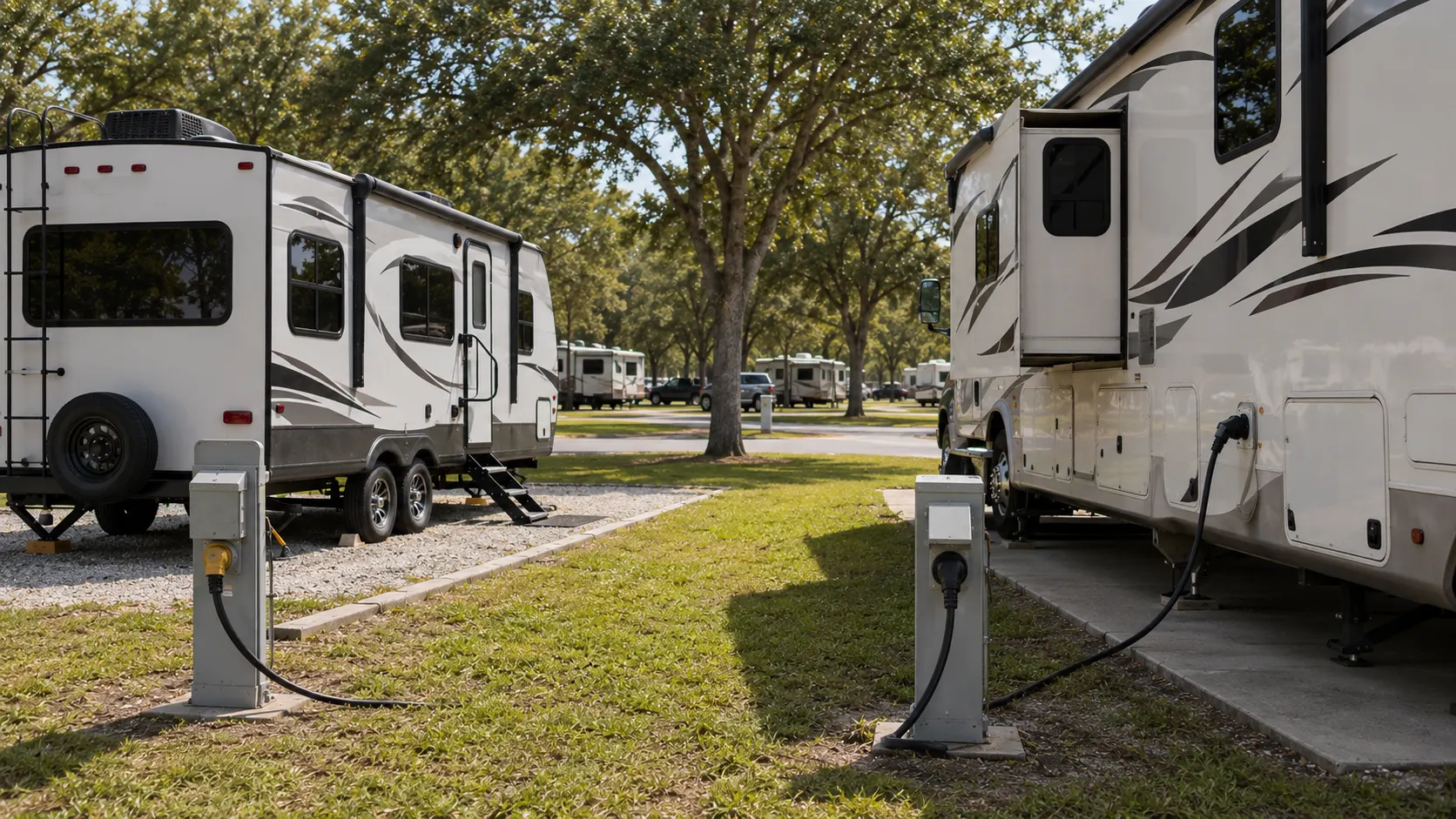
One of the most common RV setup questions is whether 30-amp or 50-amp service is needed. A lot of guests hear these terms early, often when booking a site or preparing for arrival, but may not fully understand what they mean in practical terms. That is completely normal. RV power terminology can sound more technical than it really needs to.
The good news is that the basic difference is not hard to understand once it is explained clearly. In simple terms, 30-amp and 50-amp service refer to how much electrical power your RV can receive at a site. That matters because power affects the way your everyday systems work, from air conditioning and kitchen appliances to lights, outlets, and general comfort during your stay.
For first-time long-stay guests especially, this is one of the most useful basics to learn before arrival. Knowing what your RV needs can help you avoid power issues, setup confusion, and unnecessary frustration on day one.
What RV Amperage Means in Simple Terms
RV amperage is really about power capacity. In non-technical language, it tells you how much electrical load your RV can handle from the site connection.
The easiest way to think about it is this: your RV needs power to run the systems and appliances you use every day. That may include your air conditioner, microwave, refrigerator, outlets, lights, and other equipment. The more power your RV is designed to use, the more important it becomes to match the site’s electrical service to your RV’s actual needs.
This does not mean you have to become an electrician to understand it. It simply means that not all RVs are built the same, and not all of them use the same level of power. Some RVs are designed to run comfortably on 30-amp service. Others need 50-amp service because they support larger systems or heavier appliance use.
What 30-Amp Service Is
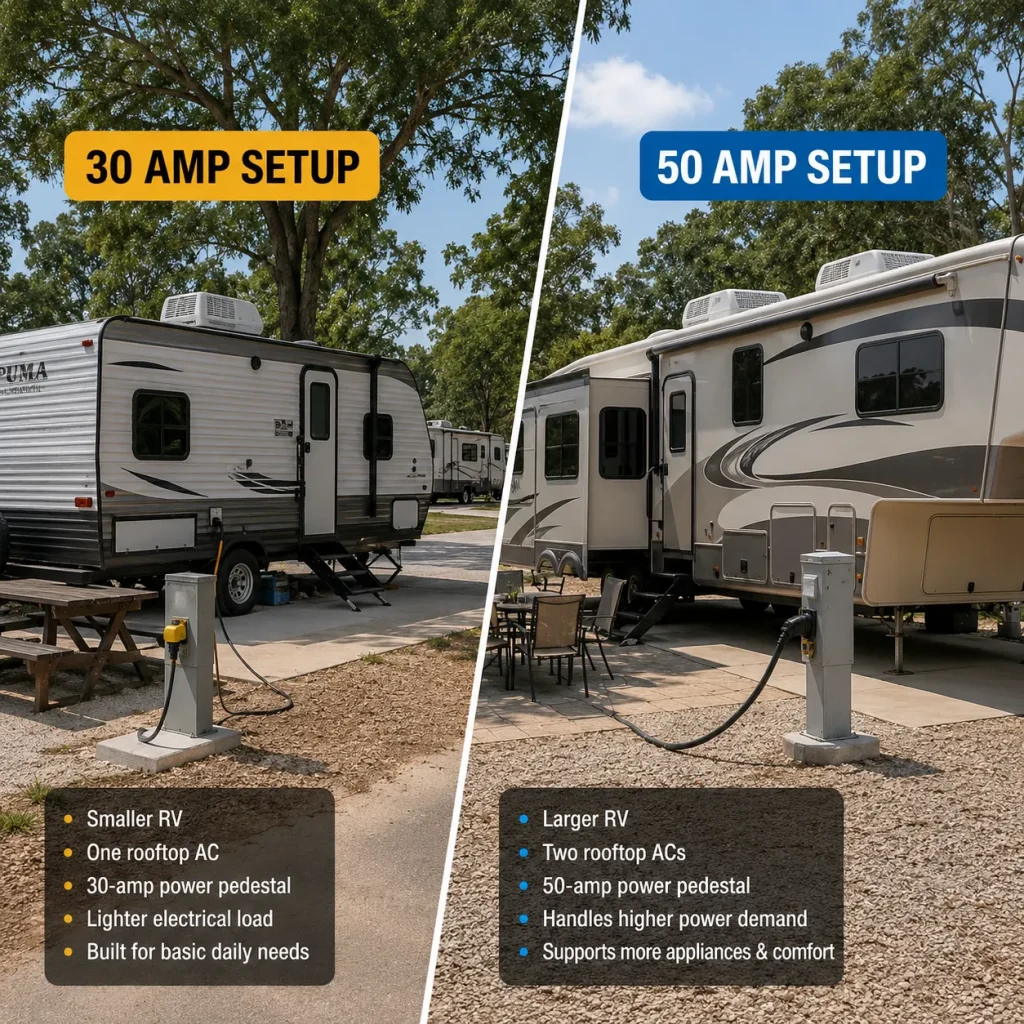
Thirty-amp RV service is common in many RV setups and is often used by smaller or more modestly powered RVs. It is designed for rigs that do not require as much simultaneous electrical demand.
In practical terms, 30-amp service is often used by guests who have fewer high-demand appliances running at the same time. It can support normal RV living, but it usually requires a little more awareness of how much power is being used all at once.
This type of service is commonly used by:
- smaller RVs
- travel trailers
- some campers
- RV owners with lighter daily electrical needs
That does not mean 30-amp service is “bad” or limited in a negative sense. It simply means it is built for a different type of rig and a different level of demand. Many RV guests use 30-amp service comfortably, especially when the RV was designed for it from the start.
What 50-Amp Service Is
Fifty-amp RV service provides higher power capacity and is commonly used by larger RVs or setups with heavier appliance demand.
This type of service is often associated with:
- larger motorhomes
- bigger fifth wheels
- RVs with more systems running at once
- setups that rely more heavily on air conditioning and multiple appliances
For many RVs designed for 50-amp service, that added capacity helps support a more demanding day-to-day electrical load. This can be especially helpful during longer stays, warm weather, or situations where comfort systems are working harder.
Some guests assume 50-amp service is always better simply because the number is higher. But that is not the right way to think about it. It is not about choosing the “bigger” option just because it sounds stronger. It is about using the service your RV is actually designed for.
Why the Difference Matters
The difference between 30-amp and 50-amp service matters because power affects how smoothly your RV can function during your stay.
One reason it matters is power reliability. When your RV is matched to the proper electrical service, your setup tends to work more smoothly and predictably.
It also matters for appliance usage. Some RVs are built with more power demand in mind. If the electrical service does not match that demand, guests may run into limitations or frustration.
Air conditioning demand is another big factor. In warmer conditions, power needs can become more noticeable, especially for long-stay guests who rely on climate control for everyday comfort.
The difference also matters because it helps you avoid overload issues. Guessing wrong or assuming the service type does not matter can lead to preventable problems. A simple compatibility check ahead of time is much easier than trying to solve the issue after arrival.
In short, the difference matters because your stay becomes much easier when your RV’s power requirements and the site’s electrical service are aligned.
Common Mistakes Guests Make
Power-related confusion is common, especially for newer RV owners or first-time long-stay guests. Most mistakes come from assumption, not from anything complicated.
Guessing Instead of Confirming Their RV Needs
One of the most common mistakes is simply guessing. Some guests hear “30-amp” and “50-amp” and assume they can decide based on preference or convenience. In reality, the correct answer depends on what the RV was built to use.
It is always better to confirm than assume.
Assuming Bigger Is Always Necessary
Some people assume 50-amp service is automatically better because it sounds more powerful. But bigger is not always the goal. The right service is the one that matches your RV properly.
If your RV is designed for 30-amp service, then that is the answer that matters. If it is built for 50-amp service, that should guide your site planning. Matching the RV is what matters, not choosing the larger number for the sake of it.
Not Checking Compatibility Before Arrival
Another common mistake is waiting too long to ask the question. Guests sometimes arrive without confirming what service is available at the site or what their RV needs. That can turn a simple setup into an avoidable problem.
A quick check before arrival can prevent confusion, delays, and unnecessary stress.
How to Know What Your RV Needs
If you are unsure whether your RV uses 30-amp or 50-amp service, the answer is usually easier to find than you might think.
Start with your owner documentation. Your RV manual often provides the clearest guidance on the power service your unit is designed to use.
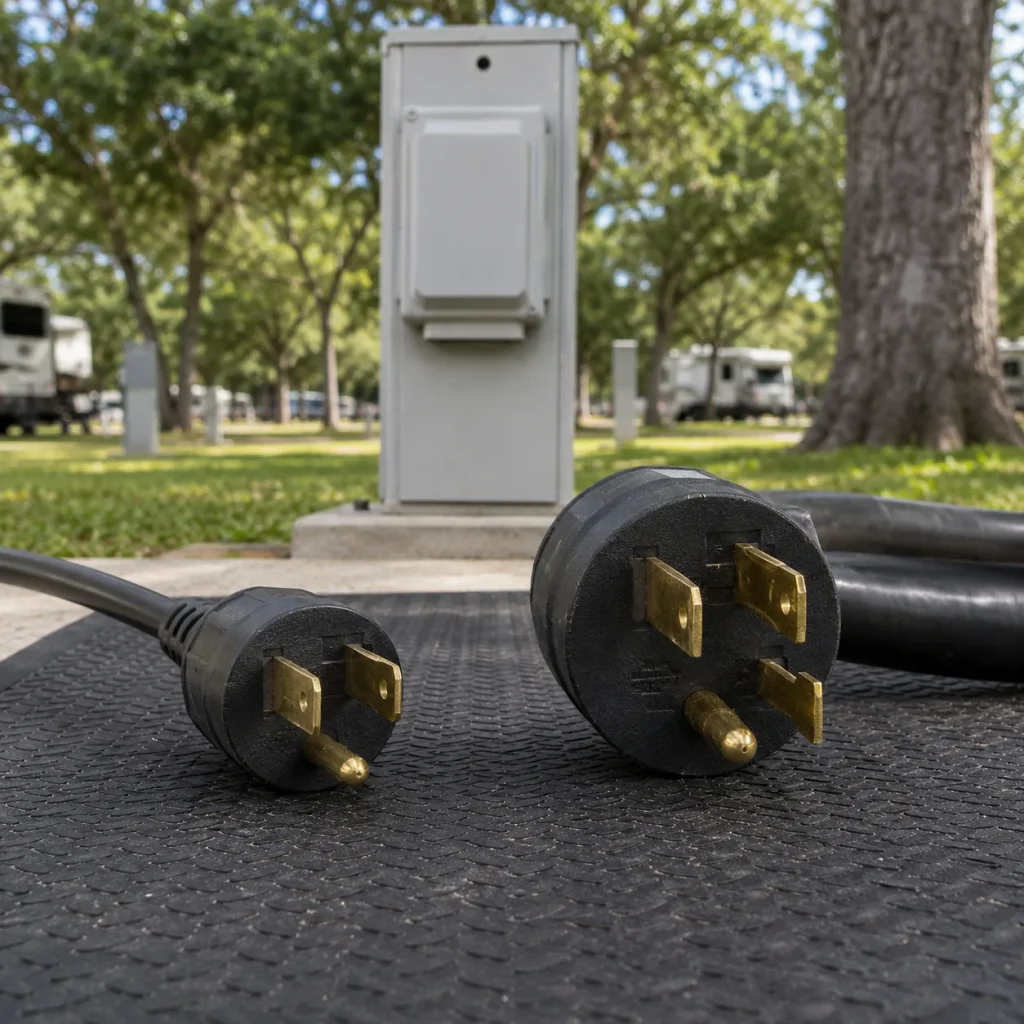
You can also check the RV label or cord type. In many cases, the RV’s connection setup helps indicate what type of service it requires.
If you are still unsure, confirm with your RV manual, dealer, manufacturer information, or provider documentation. The goal is not to make an educated guess. The goal is to know with confidence.
This is especially important for first-time guests, because once you know your RV’s service needs, many other setup decisions become much easier.
What to Confirm Before You Pull Into a Site
Before arrival, there are a few simple things worth confirming.
Available Service
Ask what kind of electrical service is available at the site. This is the most important first step.
Adapter Needs
If your setup requires an adapter, it is better to know that in advance rather than discovering it after arrival. Preparation makes move-in smoother.
Power Expectations
Think practically about how you will use the RV during your stay. Will you be relying heavily on cooling, appliances, or extended daily use? Your routine matters, especially on longer stays.
Equipment Readiness
Make sure your power setup is ready before you pull in. That includes knowing your RV’s service type, having the right connection equipment, and being prepared for a smooth hookup process.
Frequently Asked Questions
The main difference is power capacity. Thirty-amp service supports a lower electrical load, while 50-amp service supports a higher one. The correct option depends on what your RV was designed to use.
No. Bigger is not always better. The right service is the one that matches your RV’s actual power requirements.
Check your owner manual, RV documentation, connection setup, or manufacturer information. It is better to confirm directly than guess.
What matters most is compatibility with your RV’s design and connection needs. Guests should always confirm the correct setup for their rig instead of assuming the larger service is automatically the best choice.
It matters because longer stays involve more daily appliance use, climate control, and routine power demand. The correct service helps the RV function more smoothly and reliably.
You may run into setup confusion, delays, or preventable electrical issues. A simple check ahead of time usually avoids that.
Yes. Air conditioning can increase power demand, especially during longer stays or warm weather, which makes correct electrical service more important.
Confirm the available electrical service, whether you need an adapter, what your RV requires, and whether your power equipment is ready for hookup.
Final Thoughts
Knowing your RV’s power requirement prevents avoidable problems.
For many guests, 30-amp vs 50-amp service sounds like a technical detail until the day it starts affecting comfort, appliances, or arrival setup. But once you understand the difference, it becomes much easier to plan confidently.
At the simplest level, 30-amp and 50-amp service represent different levels of electrical capacity. Some RVs are built for one, some for the other, and the key is making sure your RV and your site match properly.
That simple check can save time, reduce frustration, and help your stay begin much more smoothly. Whether you are a first-time long-stay guest or a newer RV owner, learning this before arrival is one of the smartest things you can do.